Friday, September 24, 2021

Justin Smith—Recently Retired Already Forgotten?

By John Turney 

Six years ago when Justin Smith retired his team, properly, made a big deal of it.  49ers CEO Jed York said, "Justin was "Tough. Physical. Durable. Hard-working. Dedicated. Selfless. Whether it was chasing down a wide receiver and forcing a fumble to seal a win, or driving a tackle back into the quarterback's chest, he gave everything he had every play."

49ers general manager Trent Baalke added, "Justin is the consummate professional whose impact on this organization can never be measured by statistics alone. His durability, competitiveness, work ethic, strength, and rare stamina helped set him apart over his 14-year career. Cowboy will go down as one of the best to ever wear a 49ers uniform and his candidness, work ethic, and pure passion for the game will be missed" 

"As a football coach, you will always be searching for the next Justin Smith, knowing full well you will never find a player quite like him," said 49ers head coach Jim Tomsula. "Justin never concerned himself with personal accomplishments, his unselfish nature made that impossible. People like to say 'they broke the mold with him' but there was never a mold. Justin Smith is a hand-crafted football player."

Robert Saleh said, "Justin Smith is pure strain and violence that he played with inside. I mean he was just a Brahma bull in there, just so strong."

High praise.

In 2021 he was on the Hall of Famer's preliminary list but this year he's already fallen off of it. That does not mean he won't be back on it and also, he may not be a Hall of Famer ultimately. And right now there are two qualified 49ers on the list Bryant Young and Patrick Willis that will hopefully get in soon. 

However, whether he ever gets into the Hall of Fame or even Final 15 or Semi-final list of 25 is necessarily relevant to remembering an excellent player. After all, not all great players end up in Canton, sad to say, especially if you are a blocker or tackler. Skill players have an easier route because they have "stats" even if the stats are skewed due to the extreme passing league the NFL has become. 

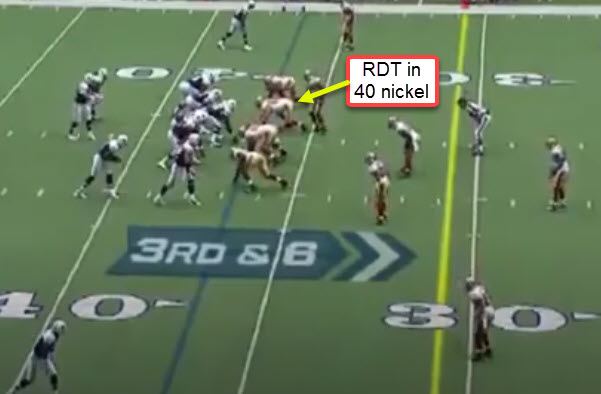
When he joined the 49ers he became a player like Howie Long, Dan Hampton, Richard Seymour, .. Watt—like that. He was a base 3-4 end and a defensive tackle in nickel situations and in doing that he was one of the best, In fact, in 2011 and 2012, he was named to the Associated Press All-Pro team both as a defensive end and as a defensive tackle. 

Upon Smith's arrival to the Bay area—2008 through 2014, the 49ers allowed just 3.71 yards per rush, tied the best in the NFL in that span, and were second in the fewest rushing yards allowed. They also allowed the third-fewest points in the NFL and were second in sacks. Smith (and Willis) were a big part of those achievements

They also got to the Super Bowl but lost to Baltimore. 

In his dual roles as a run-stopping end in the base defense and the interior rusher in the sub-packages, Smith was great at both. He had great 'base'—the ability to take on blocks and stay low, so he couldn't be moved and as a rusher, he was relentless and could take on double teams and still push the pocket.

Starting around the time Smith went West organizations like Football Outsiders, Pro Football Focus, the 49er coaches themselves began tracking hurries and pressures and Smith was almost always among the league leaders among interior defensive linemen. The hurries/pressures numbers are not in agreeance among the different organizations, it is a subjective stat, but they all agree he had top-notch numbers.

Smith began in the NFL as a 4-3 end with good speed and strength. Here are some quotes around NFL draft time 2001 when he was the fourth overall pick—


He had reported 40-yard dash times of 4.59, 4.64, or 4.7 depending on the report you read. He had good strength with 26 reps of 225 pounds. Dick LeBeau told the press, "I couldn't be happier we got the fastest defensive lineman in the draft".

With the Bengals, he was a 4-3 defensive end, and though he didn't have the sack production hoped for he put good pressure on the quarterback. He had a great ethic, and smarts. 

From watching footage Smith was mostly a weak-side end his rookie year and the next year he was usually on the tight end side in the base defense. There were exceptions, of course, but he did drop into zones quite a bit in Dick LeBeau's zone blitz calls.

After that, he settled in at right defensive end with the exception of 2005 when he was the left end in their base. He was amazingly durable in his Bengals career, never missing a game due to injury (he missed one his rookie season due to a holdout) and usually playing over 90% of the team's defensive snaps. 

He was franchised in 2007 and that year he had just two sacks (though he played an NFL-leading 97.9 percentage of plays among defensive linemen), and that low sack total likely led to him not being signed by the Bengals to a long-term contract and becoming a free agent where the 49ers signed him to a six-year contract for $45 million. 

In Smith's first year in San Francisco was a 4-3 end and a 3-4 outside linebacker in what Mike Nolan called a hybrid 3-4 scheme—


In that scheme, as seen in the stills above Smith would play end, stand-up (de facto outside linebacker) and began playing tackle in nickel/dime situations. 

Statistically, he was his usual self, with 73 tackles, 7 sacks and, we suppose, between 26 and 52 pressures—basically the same as a couple of previous seasons but it was in 2008 that Smith seemingly found the role that suited him—a 3-4 end and nickel right tackle. 

After that, he was tremendous making the Pro Bowl from 2009-13 and was First- or Second-team All-Pro from 2011-13. His duel positions confused the Associated Press voters making First-team All-Pro at defensive tackle and Second-team All-Pro at defensive end. In 2012 he was Second-team for both positions though he was First-team on the Sporting News All-Pro team.

In 2013 he was Second-team at defensive tackle and finally, the AP voters got it, he got no votes as a defensive end.

Perhaps as important, if not more so than post-season honors bestowed by the media are evaluations of ProScout, an independent NFL scouting group that has graded every player since 1977. According to them, Smith was "blue" their highest grade in the majority of his seasons, and had "blue traits" in twelve of fourteen seasons, including smarts, work ethic, and pursuit which, in their words, were "unmatched" and that applied to his years with the Bengals and the 49ers.

We'll see if the Hall of Famer voters at least vote him to the preliminary list in the coming years. It seems like he's earned that.

Career stats—

Smith's pressure numbers (and yes, we're aware of the diverse numbers but it shows a lot of pressure no matter what source you prefer)—
NFL = NFLGSIS
FO = Football Outsiders
Coaches = 49ers team stats
Stats = Stats, LLC.
PFF = Pro Football Focus 

Tuesday, September 21, 2021

Jones Owns End Zone as Packers Beat Lions

 By Eric Goska

Lions fans invaded Lambeau Field's parking lot ahead of
the game between Green Bay and Detroit.

Does Aaron Jones have a future in real estate?

The Packers’ dynamic running back found the end zone four times in Green Bay’s 35-17 victory over Detroit. He repeatedly closed the sale in one or the other of the two most sought-after plots of land at Lambeau Field.

Used sparingly (7 touches) in the opener against the Saints, Jones’ workload (23 touches) increased against the Lions. He rushed for 67 yards on 17 carries and caught six passes for another 48.

But it was his four scores that mattered most. The Green and Gold went 4-for-4 in the red zone thanks to Jones who capped drives with three touchdown receptions and one on the ground.

In grabbing four, Jones became only the second player (Sterling Sharpe, 1994) in Packers history to score a touchdown in all four quarters of a single game.

Jones’ tied other records as well. He, Johnny Blood and Andy Uram are the only backs in team annals to have caught three TD passes in one game. He, Paul Hornung (2), Jim Taylor (3) and Sharpe (2) are the only Packers to have scored four TDs more than once.

(Jones rushed for four touchdowns in Dallas in 2019.)

Jones has been a producer of points since being selected out of the University of Texas at El Paso in the fifth round of the 2017 NFL Draft. Has scored at least one TD in 31 of the 56 regular-season games in which he has played, and Green Bay has gone 23-8 (.742) in those contests.

Moreover, he has amassed his haul at a lightning-quick pace. Only Taylor (51) and Ahman Green (47) had as many or more TDs in their first 56 regular-season games as Packers.

Jones was the Green and Gold’s not-so-secret weapon inside the Detroit 20-yard line. The Packers ran 13 plays there and gained 52 yards. Jones accounted for 48 on 10 touches and registered all six of the team’s first downs in the red zone.

Monday night was the second time Jones has scored multiple touchdowns on pass receptions in a game. He had two in a 31-24 win in Kansas City in 2019.

Historically, the Packers have done well when one of their backs catches two or more TD passes. Starting with Marty Norton in 1925, the Green and Gold have gone 22-2 (.917) when a running back reaches the end zone at least twice through the air.

The team is 5-0 at Lambeau Field.

In piling up four scores, Jones – who had 19 in 2019 and 11 last season – becomes the odds-on favorite to lead the team in touchdowns this season.  Were he to finish with 10 or more, he would join Don Hutson (1941-45), Taylor (1960-64), Sharpe (1992-94) and Davante Adams (2016-18) as the only men to have scored at least 10 TDs in three or more seasons consecutively.

EZ (End Zone) Living
Packers players who scored the greatest number of TDs in their first 56 regular-season games.

    TDs        Player                            Years
      51          Jim Taylor                     1958-1961
      47          Ahman Green               2000-2003
      47          Aaron Jones                  2017-2021
      39          Don Hutson                  1935-1940
      37          Paul Hornung               1957-1961
      37          Antonio Freeman         1995-1999
      36          Bill Howton                  1952-1956
      32          Randall Cobb               2011-2015

TUESDAY TIDBITS: "Back in the Saddle"

By TJ Troup 

Middle of July attempted to order a ticket for the Rams @ Colts, and am convinced due to the lack of professionalism that the CEOs of both Vivid Seats & Ticketmaster they will both be able to find employment at a Wuhan Lab sweeping floors and taking out the trash. 

Really wanted to attend this game, and as such contacted Matt Conti of the Colts. He had Ms. Katie Voelz contact me, and eventually, after making the drive Sunday morning got my ticket at the will-call window. 

There are organizations that have sure enjoyed working with over the years, and the Colts are right at the top of the list—from my days communicating with the distinguished Mr. Craig Kelley to Matt Conti; these guys just know how to treat people.  

Ok, back to the game. Lucas Oil Stadium is a terrific place to see a game, and sitting next to me is a young couple wearing Rams gear, and of course asked if they are from California? Michigan, oh, I get it—Matt Stafford fans shifting allegiance. 

Nelson and Donald

The hard-fought game was almost entirely free of penalties thus the "zebras" could not control the action, and flowed strongly all afternoon. So many outstanding players on the field. Where do I begin? How about d-tackle with massive DeForrest Buckner (who was able in pursuit) to squat Aaron Donald who played his usual strong game. Both Nelson and Leonard had their moments at guard and linebacker respectfully. 

Then Indianapolis rallied to take the lead on the fumble recovery thought that this just might be an opportunity for Stafford to display his talents—and yes he did. He is building a synergy with Cooper Kupp, and after the Rams dedicated receiver had made numerous catches already, thus the Colts decided to double cover him. Stafford read the coverage expertly and immediately pitched to Woods. 

One of my favorite songs by Aerosmith is "Back in the Saddle" and boy oh boy felt like I was back in the saddle on Sunday as I absorbed all aspects of the game. Not sure if the Colts are the best 0-2 team in the NFL, but their game on the road this Sunday in Nashville should be a dandy. Avoiding injury the rest of the season the Rams are certainly going to be a factor and taking on the defending SB champs from Tampa should be game of the week. 

Jack Kemp

As for our historical journey; let's head to War Memorial Stadium on September 19th, 1965. The defending AFL champion Bills have been a strong team since the middle of the '62 season, and already have a victory over the Patriots. Buffalo is a team that wins on defense, and a powerful running game-—though strong-armed Jack Kemp can make every throw. 

Late in the first quarter with a 3-0 lead Kemp lofts a long pass up the right sideline for flanker Elbert Dubenion who has raced paced future Hall of Fame corner Willie Brown for a 48 yard catch even with Brown having safety help from John McGeever. Buffalo punches it in, and goes on to a 30-15 win. Golden Wheels Dubenion caught 5 for 103 yards, and his race horse speed and improved route running enabled Buffalo to have the deep threat every team wants, and needs. 

Elbert Dubenion

Though Dubenion had strong games against other opponents, the only team that he averaged 20 yards a catch against in his career was Denver. The next week (again at home) Dubenion made a sliding catch in the end zone against the Jets for 11 yards and a touchdown in the 3rd quarter, and severely injured his knee. He recovered to continue his career, but was just not the same receiver. Buffalo defended their title in December in San Diego, and were the dominant team in the mid-60s in the AFL. 

Monday, September 20, 2021

Single-digit Jersey Numerals Now Open to More Postions

 By John Turney 
Dick Gordon
There have been several iterations of the numerals players can wear in NFL games. One notable change was in 1952 that required backs and ends to not wear numbers in the 50s, 60s, 70s and so on.

Otto Graham had to switch from No. 60 to 14. Mac Speedie and Dante Lavelli were ends that had numbers in the 50s and had to change to numerals. Those two chose numbers in the 80s.

There was another big deal in 1973 when the standardized numerals were expanded so that players had to be issued numbers by their positions. Before that, there was a lot of diversity in numbers—receivers could be found wearing numbers in the 20s, 30s and 40s as well as in the 80s for example.

There were other changes later, one of them was adding numbers in the 90s in 1979. Another one of the changes was in 2004 allowing wide receivers to wear numbers from 10 to 19. 

That was called the "Keyshawn Johnson rule" because Johnson had been allowed to wear number 19 when he was drafted by the Jets, but that was an exception because no numbers in the 80s were available.

Now, with this new rule, it is a free-for-all. Lots of players can wear single digits -- receivers, running backs, linebackers. Only a few positions can't like linemen.

One of the standardized categories defined in 1973 was who could be issued a single-digit number. At that time it was only quarterbacks and kickers and punters.

There was a time that Archie Griffin the two-time Heisman winner petitioned the NFL to wear number 1 because of his religious faith and his belief was he could worship Jesus Christ by wearing the numbers, as in "Jesus is number one in my life."

He was denied.

The year before the 1973 rule change the Rams signed a wide receiver named Dick Gordon who had played out his option with the Chicago Bears. As per the Rozelle rule—which allowed NFL commissioner Pete Rozelle to determine compensation to the team losing a player in free agency from the team who signed the player.

Rozelle determined that Gordon was worth a first rounder and when the Rams knew that value was set they signed him. Prior to that teams hesitated because though he may be worth more than a first, George Halas wanted more, even a player from the team who signed him plus a high pick.

So, Rozelle set it and the Rams jumped likely thinking a guy coming off back-to-back Pro Bowls was worth that and he could add some productivity to their receiving corps of Jack Snow and Lance Rentzel and some very young non-productive players.

Gordon was a very good player who'd been All-Pro and Pro Bowler in 1970 and a Pro Bowler the year after -- when he played out his option.

Disgruntled in the Windy City because he felt underpaid and also contended there was racial bias by the Bears organization. Gordon wanted out.

In Chicago, Gordon wore no. 45 but when he arrived in Los Angeles he wanted a change. he wanted a single-digit number and not only that, it had to be a prime number. He initially chose no. 7 which he didn't get.

It wasn't going to happen because the Rams had retired that number—it had belonged to Hall[of-famer Bob Waterfield and no one was going to get it. 

So, when equipment manager Don Hewitt informed him of that, Gordon chose no. 5—another prime number. He could have taken 2 or 3 as well but 5 it was.
Dick Gordon in 1972
With the choice, he became the first Rams non-quarterback to wear a single digit since 1949. 

Now, of course, Jalen Ramsey wears it. 

Gordon got to wear in in 1973 as well even though there were new rules but veteran players were grandfathered in. They could wear numerals worn before the new rule. 

The signing of Gordon turned out badly as it turned out. He did virtually nothing in 1972 and 1973. He was oft-injured and in 1973 he had a dispute with a coach on the sideline and rookie head coach Chuck Knox released him.

He was signed quickly by the Green Bay Packers and got his wish in terms of the number he was to wear -- he was issued the no. 7 and played a couple of games for the club but did nothing.

But it didn't last long. The following season he had a cup of coffee with the San Diego Chargers and they assigned him no. 88—not a single-digit prime number. 


Sunday, September 19, 2021

Two Pick-6s in One Game—Mike Edwards Joins the Club

By John Turney 
The Buccaneers Mike Edwards had two fourth-quarter pick-sixes of Falcons quarterback Matt Ryan in todays game. It was the 27th time it has happened in NFL history

Here is the list, per PFR—


Friday, September 17, 2021

R.I.P. Roger Brown—A Massive Player and a Better Man

By John Turney 
Art Credit: Nicholas Volpe 
Former NFL  player Roger Brown died around this morning at 2 A.M. Friday according to media reports, no cause of death was announced. He was 84.

Brown played in the NFL from 1960 to 1969 for the Detroit Lions and the Los Angeles Rams. He'd been inducted into the College Football Hall Of Fame, the Black College Hall Of Fame, and the Virginia Sports Hall of Fame. He also was voted to the Pro Football Researchers Association's  Hall of Very Good in 2007.

Brown, a Virginia native, went on to play for Maryland State College (now Maryland Eastern Shore). Brown the team to a conference title in 1957 and an NAIA All-American in both 1958 and 1959.  He also was named twice to the Pittsburgh Courier Black All-America selection,

He was drafted 42nd overall in the 1960 NFL Draft by the Detroit Lions.—he was a huge man, 6-5, 300-pounds (34-inch thighs for whatever that is worth), but could still run well. Teammate Harley Sewell said he could "run like a deer".

He started 124 of 138 games in his NFL career, amassing 78 sacks, 2 interceptions, and 3 safeties. He had double-digits in sacks in four seasons with a career-high 14½ in 1964. In 1962 he had two safeties and one in 1965 and retired tied for the most in NFL history in that category. 

Brown was First-team All-Pro in 1962 and 1963 and was Second-team All-Pro in 1961, 1964, and All-Conference in 1964, 1965, and 1966 and a Pro Bowler from 1962-67. 
Right defensive tackle Roger Brown (#76) manhandles the left guard

In 1962 he was the leading rusher in the so-called Thanksgiving day Massacre when the Liones routed the defending NFL champions Green Bay Packers 26-14, sacking Bart Starr 11 times and giving the Packers their only loss of that season. 
Art Credit: Merv Corning
On that day Roger Brown had at least five sacks and possibly one more but since the full game has not been recorded we may never know for sure who got the one sack that was not identifiable by gamebook or film. Anecdotal evidence suggests he had six but it has not yet been confirmed. 

The Lions report that he had seven sacks that day, however, the gamebook suggests that five of those are accounted for by other players so it does, as we mentioned, leave room for a sixth sack for Brown.

Regardless Brown forced two fumbles and scored a safety as well. 

That year he was named the NFL Pro Lineman of the Year by the Los Angeles Times and receiver two votes for MVP by both the AP and UPI. Had there been an award for Defensive Player of the Year, Brown would have likely won it. 
Art Credit: Don Weller
In 1967 Brown was traded to the Los Angeles Rams as a replacement in the Fearsome Foursome for Rosey Grier who had gone down with an Achilles injury.  Grier was injured on September 1st and the Rams acquire him on September 8th. The price for Brown was steep, a first-, second-, and third-round pick but George Allen wanted to ensure that his front four did not lose a beat. 

It didn't. In 1967 and 1968 the Rams defense was better than ever with Brown, who was younger than Grier (who was still a fine player in his time with the Rams 1963-66). 

One uniform oddity is Brown should also be credit as one of the first, if not the first NFL player to wear short sleeves on his jersey to make it harder for offensive linemen to grab him. That became more and more common throughout the 1970s and now, no one has sleeves.

Brown was available because the Lions were concerned about his left knee which was hurt in 1964 but had to have surgery again in the 1967 off-season. Also, though listed at 300 pounds he weighed more than that, and at that point in time teams didn't want players that were "too big". 

Lions head coach told the media, "We are looking to the future and we feel the younger players will be adequate replacements". Brown, however, was not please, at least initially telling newsmen "I hope I am around long enough to hurt the Lions".


Brown with Rosey Grier and the other members of the
Fearsome Foursome on a Milten Berle TV special
In 1969, perhaps sensing he was getting older, reported at 285 pounds, the lightest he'd been as a pro. But he broke his hand and missed most of the preseason and when he came back he'd lost his starting job to Coy Bacon though they rotated some and Brown got a lot of snaps on running downs, by then his forte. Bacon was the "rusher".

In late August 1970, Brown retired. He was not able to get himself into "playing shape". He reported to camp weighing 334 pounds. And he also likely had an eating issue. Rams players have told us he'd order pizzas after lights out and consume them voraciously. 

The issue continued after his career and his weight reached 450 pounds and a related health scare caused him to change his lifestyle. He had his stomach stapled and then maintained his diet dropping to 225 pounds for essentially the rest of his life.  

After football 

Brown became a restauranteur as the owner of Roger Brown's Restaurant & Sports Bar in Portsmouth, Virginia. He owned several fast-food restaurants as well. 

Detriot Lions owner Sheila Ford Hamp released a statement reading, “Roger Brown will always hold a special place in our team’s history. Roger’s career accomplishments solidify his legacy alongside some of the all-time greats of our game. We are deeply saddened to learn of his passing, and we extend our heartfelt condolences to his wife, Kay, and the entire Brown family.”

We interviewed him a time or two and found him to be a smart, funny, charming, and a, ahem, handsome man. 

Rest easy Mr. Brown.

Rams Sub Packages Last Sunday Night

By John Turney

After looking at the All-22 we noticed a few different nickel defenses, as well as dime in the Rams, win over the Bears last Sunday night 

This is six DBs, two LBers, and three DLmen. Taylor Rapp is playing linebacker, and Nick Scott takes his place as the right safety (Rams use left- and right, not strong and free safeties). In this case the nickel bak is  Darious Williams with Jalen Ramsey and David Long outside. 


This is the Rams "mint" nickel that employs Jalen Ramsey as the nickel or "Star" and a MIKE 'backer and a moneybacker.  The "Jack" is a hybrid linebacker/defensive end, call it the "edge" player.


Here is a classic nickel look with Jalen Ramsey as an inside linebacker and this time David Long is the nickel corner.

This is one of four nickel defenses we saw. Here it has Troy Reeder as the WILL with Kenny Young on the three-receiver side, making him the MIKE. This is a single-high look, which is kind of rare. Usually, the Rams show a two-high look and rotate one of the safeties down as a robber-type player.

This is dime with Young as the MIKE and Rapp the near corner and Williams as the slot corner on the top side of the still.

The Rams pass defense held the Bears to 219 yards passing on 40 attempts (5.48 yards per attempt)  and a defensive passer rating of 74.6 and picked off one pass and defensed six others.

We will try and monitor any others that show up. It may not be as many different packages as Fritz Shurmur employed back in the day but it is close.