Saturday, June 17, 2023

The 1963 Chicago Bears: "I Decided We Needed the Ball"

By TJ Troup 
Have long contemplated writing this saga, my favorite team of all time, but knowing my bias, have struggled with objectivity. The title comes from a quote from right corner Dave Whitsell from the final regular season game win over Detroit and will explore him and that statement at the end of the story. Rather than just diving into who played what position, and how well the '63 Bears need to set the stage by discussing the champions of '62. 

The 1962 Green Bay Packers will always be ranked as one of the truly great teams of all time. During the '62 campaign, they beat the Bears 87 to 7. While no one knows the exact date of Clark Shaughnessy "leaving" the Bears, believe it was after the 49-0 humiliation in late September of '62. George Allen was hired as player personnel director in October of 1958, and over the years worked his way into becoming an assistant coach, and working with the secondary. Have read more than one account that Clark hated Allen. 
George Allen and his troops
George Allen is/was my defensive "guru", and one of the truly magical days of my life was being the guest of the Allen family for George's enshrinement into the Hall in Canton. Tom Bennett details Stan Jones sitting next to Allen on the plane ride to Minnesota for week four in '62 (13-0 shut-out)in his book (a must-have for anyone who relishes the history of the game). The rematch against the Packers in Wrigley in November (listened intently on the radio) was an ass-whipping. 

Green Bay is comfortably ahead and has the ball, and the Green & Gold juggernaut is so powerful running the ball that Allen takes out starting right safety Rosey Taylor, and goes with an eight-man front with Petitbone aligned in the middle of the field. Did not matter, repeat did not matter as the Pack thundered through the Bears' defense. 

You have the target for the Bears for '63....the hated champion Packers, and you are going to learn about a man who has been granted an opportunity to achieve coaching acclaim. Can George Allen put a defense on the field in '63 that can stop,...... ok limit the Packers? We all know that even if you have a strong defense, the offense must do its job, and thus will start there. 

The format will be much like my book "The Birth of the Modern 4-3 Defense". Who played where, and how well.....and will begin with the o-line coached by Phil Handler. 

Rookie Steve Barnett begins the year at right o-tackle, but cannot keep the job. He will be replaced by one of the unsung men of the Bears in Bob Wetoska. Big Bob plays so well at both tackle and at times right guard he receives some All-Pro recognition. He moves well in space, can drive block, and more than holds his own as a pass blocker. 

The right guard post is shared by Jim Cadile and Roger Davis. Davis never achieved what was expected of him after his college career at Syracuse. His one strength was the ability to pull and lead a sweep but was not much of a drive blocker, and in week three in Detroit played much of the second half at left offensive tackle and demonstrated he had no future at that position. Cadile on the other hand was more than adequate in all facets of o-line play. Left guard is handled by Ted Karras, and though he is not very polished, he gives maximum effort. Since he must face Henry Jordan and Roger Brown during the campaign he must prove he is not a weak link. 

The left tackle is veteran Herman Lee, and the big man still moves his feet well, and is a fine pass blocker. The drive block was never his strength, yet the effort is there. 

By far the best o-lineman on the Bears is center Mike Pyle. Excellent feet, and technique, and he is outstanding at protecting Wade as a pass blocker. Young Mike might not be All-Pro (he does receive some acclaim), he is simply the best drive-blocking center in the league as Wade is masterful at the qb sneak (especially at the goal line). 
Angie Coia and John Farrington still share the split end position, yet neither man shines in '63. Coia though is versatile enough that he fills in at flanker when Morris is out of the line-up. Johnny Morris has made the transition from running back to flanker and improved each of the last two years, and begins the '63 campaign by catching 31 passes for 437 yards in the first seven weeks. His quickness, and sharp cuts get him open. 

The next six weeks he battles injury and catches but 8 for 97 yards. When needed the most he rises in the season finale to latch onto 8 passes for 171 yards in the win over Detroit. When in doubt you throw to the best in the league, and Mike Ditka is simply the best tight end in pro football. Film study shows him drop a pass now and again, but the man has surprising speed at this point in his career, and runs every pattern like his life depended on it. Tough after the catch, he absorbs the hit, and breaks away (that aspect will catch up to him in '64).  
He is the go-to guy for Wade, and he delivers. Ditka aligns flexed, tight on either side, and is not only a strong blocker at the point of attack the man hustles downfield and throws open field blocks that are textbook. 

The Bear offensive backfield is by committee, and that committee is flawed with a capital "F". Willie Galimore began 1962 with a game for the ages against the 49ers in Kezar, attempted to play the next few weeks with an injured knee that needed surgery, and he is the question mark for Chicago? Will "Willie the Wisp" ever be a game-breaker again? He does not catch near as many passes as earlier in his career when he would jet through a secondary to score, he is a runner trying to recapture his breakaway ability. 

Though the 27-yard touchdown against the Packers is impressive, Willie is just not the Wisp anymore, thus second-year man Ronnie Bull gets plenty of playing time at halfback. He won Rookie of the Year in '62 (should have gone to Merlin Olsen), and he does run hard, and catch the ball well, but he is limited.....very limited. 

Rick Casares began '63 by gaining 154 yards on just 25 carries in the first four games, but nagging injuries and age have caught up with this tough guy as he gains just 123 yards on 40 carries the rest of the campaign. Joe Marconi was found wanting by the Rams, but the veteran gives the Bears all he has. No moves, marginal speed, average blocker, but somehow when he caught flat passes or screens he made yards (caught 20 passes the last eight weeks from either fullback or split back position). 

Rudy Bukich is a veteran with a strong arm and gets a few chances during the year, but the starter is a man who has never been given credit for what he did in '63—Mr. Billy Wade. His time in Los Angeles was marked by team strife and controversy, yet he had games where he shredded defensive secondaries due to his talented right arm. He can howitzer the ball with the best of them. He is a tough runner, but he has proven difficult to coach due to his belief that he can force a ball through coverage to what he believed is an open receiver. 

During '62 he set team records for yards passing, and completions. Watched him slice and dice the Colt secondary in a 57-0 destruction, and throw for over 450 yards in the comeback win over Dallas. You do not win in 1963 or in the current NFL when you throw interceptions, and Wade threw too many in '62. 

Guided by a revamped offensive philosophy which he took to heart Wade threw short, finally pitched the pigskin with touch, and continued to call a fine game strategically, and ran the sweep right superbly. He is in a division with Unitas, Starr, and a young Fran Tarkenton, and more than holds his own. Billy Wade was a difference-maker in '63 for what he did not do....turn the ball over. 

The Bear offense would sometimes align with wing sets single back, but usually is in standard pro formation running all the standard plays. Chicago moved the ball and scored 16 offensive touchdowns in the first five weeks of the year, but only 17 in the last nine games of the year. At times the Bear offense did just enough to avoid defeat, and as such the Bears were home underdogs at Wrigley in the Championship game. We have all watched teams with superb defenses contend for championships with catchy nicknames, and alignments and defensive strategies that were cutting edge. 

The '63 Bears defense did not have a catchy nickname and disguised what they did on alignment by not telegraphing what they were going to do. Clark Shaughnessy was verbally brutal to the men on the Bear defense (he did not get along with anyone), and the myriad of mystical defenses confused many a quarterback, but also put defenders in untenable positions. George Allen developed a rapport with his men by treating them like MEN. He ditched most of the mystical defenses, and attempted something new in pass defense.....the ability to confuse the quarterback by disguising coverage. 

This story is not about me yet learned from Coach Allen and Coach Tom Hayes valuable concepts that helped me have success as a high school defensive coordinator. Ed O'Bradovich had a strong rookie year in '62 but begins 1963 on the shelf (illness), and he is replaced at left defensive end by Bob Kilcullen. He is the least effective of all the Bear defenders, yet he does his job in just "holding the fort". He did an admirable job against Forrest Gregg on opening day, and though he is not much of a pass rusher he held his own till late in the year when Wild Man OB can take his place in the line-up. 

Stan Jones was an All-Pro guard who lost his speed and cannot pull. He is moved to defense and this warrior of superior strength will just not be moved. Quick enough to provide a capable pass rush up the middle Jones a future Hall of Famer battles all the quality offensive right guards in the league to a standstill. Earl Leggett was supposed to be a dominant defender and has overcome injury to become the starter at right d-tackle. His size, smarts, and toughness helped the '63 Bears become champions.

Doug Atkins
Legendary Doug Atkins had his best year in '63. Many times watching film of this team my response to one of his plays is WOW! That is all that is needed to be said. He is one of the best pass rushers in the league, and he schooled rookie Sanders of the Lions in week three. Atkins motor was reved up in '63 as his pursuit skills improved dramatically. His 10th year is not filled with his rookie mistakes as a Cleveland Brown. He is now the premiere right defensive end who must be accounted for on every play....he relished playing for Allen stating " I would kill for that man". 

Late in the year young massive John Johnson fills in at both defensive tackles (he even went both ways against Detroit in September), and demonstrates he fits right in with these nasty grizzlies. George Allen "pulled off" a trade with Washington to acquire Larry Morris in '59. Though his knees are injured he nonetheless comes like a freight train on the red dog, masterfully diagnoses running plays, and has even improved in dropping into coverage. 

Bill George
Middle linebacker is the province of Bill George, and though rumored to have thought about retirement, he returns in '63 and earns some All-Pro recognition. He still puts his knuckles in the dirt to give the Bears a 5-man line, and he knows the passing lanes when dropping into coverage, but he is a master of the big play, whether it is the sack, or shedding a block to stop a runner in a short-yardage situation. Bill cannot run like he use to, but he is still able in pursuit, and understands his mission, to win a title before retirement. 

Joe Fortunato played lights-out football at right linebacker till Morris arrived, and has improved each year that now he is without a doubt the best strongside linebacker in football. You don't run the sweep his side, he can strong-side blitz and can play both zone and man coverage, he now calls the defense on the field for Allen and his savvy, and smarts is a key to Bear success. You do not win a championship unless you play pass defense correctly. Stated that when interviewed for NFL Films presents in '98 and that will never change. 

The defensive passer rating is a tool that have used repeatedly for my stories, yet this story tells the tale the best. 1961 Bears ranked 12th of fourteen teams in this category with a mark of 76.5 (league average was 68.5), and the reason was simple. Shaughnessy had flawed coverage concepts that asked players to cover receivers without help. 

1962 Bears under Allen improved to third in the league with a mark of 55.8 (league average was 72.6), but the champion Packers led the league with a mark of 43.4. Why were they the best you ask? Well, I'll tell you why—moving Gremminger to strong safety, Whittenton's continued excellence at right corner, Adderley's development at left corner, and the most improved player in pro football in '62 Willie Wood. 

Though Willie played strong football in '61 he blossomed in '62 and was now the best, even better than Jimmy Patton, Yale Lary, and Larry Wilson. He used his quickness and speed to take the correct angle when the ball was in flight, and Wood was a tackler that covered ground and did not miss. These four men returned to Green Bay in '63 to defend their title. 

Can the Bear secondary measure up to this quartet? You betcha! J.C. Caroline is no longer the starter at left corner, he is replaced by wiry, quick, and tough-as-nails Bennie McRae—learning on the job the former Wolverine has been taught by Allen to hide his coverage whether it is man or zone. At times he still struggles, yet plays the sweep well, and intercepts six times. 

Richie Petitbon was forced to play right safety in '61 and though he did the job, he is out of position—he belongs at left or strong safety. He is Allen's disguise master, his alignments, disguise the coverage. He is too far inside of the tight ends alignment therefore it must be zone, wait ....on the snap he uses his long strides and speed to head to the flat and play the tight end man. Petitbon is stacked behind Fortunato, therefore must be man coverage or he has outside zone responsibility, yet on the snap he jets to the middle of the field to take away the square in pattern. 

Petitbon is a deserved first-team All-Pro that pilfers 8 passes (had a couple taken away due to penalty), and still a strong tackler. He earned a Pro Bowl berth in '62 and returned to Los Angeles for his performance in '63. 

Free agent Roosevelt Taylor was the last man to make the Bear team in '61, and Rosey learned that Shaughnessy did not want him, but George Allen fought for him. During '62 Taylor played well in his first year as a starter at free safety, but he is without a doubt the most improved player in the league in '63. Twelve takeaways in 14 games in '63, yet just as important as the takeaways was his ability to disguise Allen's coverage.  
Richie Petitbon
Very different than Petitbon, yet much the same. Taylor is too far from right corner Whitsell, so we audible and throw deep up the sideline, and there is Taylor using his blazing speed to help Davey. He is too close to Petitbon, therefore they must be aligned to double the tight end, or one of them takes the back man to man . . . wait, Taylor is now in deep centerfield....how the hell did he get there? Much like Willie Wood—he took the correct angle and got to where he was needed.

The Bear defensive backfield aligns in standard coverage, and does not deviate . . . they play standard coverage. The Bears mixed, and matched, and attempted to force the triggerman of the offense to hold the ball too long, or pass into an area that SUDDENLY had a defender there that was not at the snap . . . 36 interceptions and a defensive passer rating of 34.8....yes that is correct, 37 points under the league average. 

Billy Wade don't turn it over, and Allen's boys will get the ball back for ya. The expansion Vikings in 1961 acquired (given?) 36 stiffs...and one of those was a Detroit Lion safety who had started a few games in three years...Dave Whitsell. 
Page 264 of the 1967 Sporting News Player Register states the following: guard Zeke Smith, and Whitsell traded by Minnesota to New York for Schnelker, Triplett, and Bob Schmidt. New York then trades Whitsell to Bears for kicker John Aveni (one of the worst in modern league history). George Allen made many a masterful trade, and this one ranks as one of his best. 

Talented corner Erich Barnes was traded so the Bears could acquire Wade, so someone has to play corner. Whitsell was thrown at repeatedly and survived. Average speed, but so damn resilient, resilience is a trait every corner needs (sometimes learned the hard way through experience). Whitsell was a tough run defender who played the weakside sweep well, and battled all those talented split ends in the NFL in '63. He played the ball well in flight, and though considered "the weak link" in the Bear secondary he proved he was not. 

Street & Smith's '63 picks the Bears fifth in the west. Quoting Bob Oates "Trying to sum up the Bears they will probably pass well, and run fitfully. The defense depends on George. If pressed, one would have to say that the Bears will finish somewhere from second to sixth. But don't ask where." 

Don Schiffer's '63 Pro Football states "The Bears certainly should finish no worse than third again, but aren't likely to go any higher". 

The thumbnail sketches of the players talk about 11 players, but no write-up on Roosevelt Taylor, Whitsell, or McRae, and the depth chart has Larry Glueck starting at left corner ahead of Caroline, and McRae is not listed. Fred Williams is listed as the starting left defensive tackle, with Bob Kilcullen at right defensive tackle. Stan Jones is listed as the starting right offensive guard....to say Don Schiffer did not do his homework after all the excellent publications he had done is an understatement. 

The opening-day victory over Green Bay leads to four more consecutive wins, before the upset of the season at Kezar. Tom Brookshier did the announcing for Game of the Week, and the 49ers earned the win with direct power football, with a strong offensive line (St. Clair dominated Kilcullen), and J.D. Smith powering through holes. 

The two fourth-quarter interceptions by Bukich spelled defeat. Sidenote to this game that is never talked about. Tommy Davis attempted a 58-yard field goal that hit the crossbar....damn, what a kick! 

A defensive holding call negated Petitbone's second interception, that could have turned the momentum. Rebounding to win four straight including the impressive win over Green Bay at Wrigley (no Bart Starr, and the Bears take the ball away 8 times)then the tie at Pittsburgh. The game that is the most significant is another Game of the Week....this time the Bears entertain Minnesota at Wrigley. 

In the past two years Chicago has scored 83 points at home in victory over the Vikings . . . the Bear offense could have used some of those points today. The Bears open with Galimore gaining five, but Wade fumbles, and the Vikings have the ball deep in Bear territory. Tarkenton scrambles, and runs up the right sideline where Whitsell throws a forearm shot into Tark's helmet down goes Fran and Ron Vanderkellen enters the game. Minnesota goes up 3-0. 

When the Vikings get the ball back, Bill Brown fumbles and Rosey Taylor recovers. LeClerc ties the game at three. The second quarter is filled with action as Vanderkellen completes 4 of 6 for 109 yards including 30 and 53-yard catches by Gordie Smith. Minnesota 17 Chicago 3. Galimore lost a fumble, but Bear five-man line holds. Minnesota has run the ball for 52 yards, while the Bears have gained just 22 on the ground. Wade is 8 of 13 but the short tosses have gained little. 

The Bear pass rush led by Atkins and Fortunato has kept the Bears in the game. Minnesota has capitalized on four punt returns for 63 yards. The second half of this game will decide if the Bears are western conference champions. Viking ball and on 3rd down, Allen has Fortunato align the Bear defense in a 6man line and stops Minnesota. The Bears 3 and out, but Vanderkellen is sacked by Jones and Atkins, and punts. 

Chicago begins at Minnesota 49 yard line and musters a drive with Marconi gaining 29 on a flare pass. Wade follows Pyle's block into the endzone 17-10. The teams exchange fumbles, and Tommy Mason has two strong runs on Viking's next possession, but Fortunato makes the key tackle on 3rd and two at the 45. Vikings punt, but Wade three straight incompletes. Bears punt, but that man Fortunato intercepts and returns 19 yards. Fourth down and LeClerc misses a 24-yard field goal. 4th quarter and first play of the quarter Vanderkellen escapes and dashes 20 yards. 

Bears go to a five-man line and stop the run with Atkin's pursuit play on Wilson's key. Minnesota punts on 4th and 1. Bears cannot move and punt. Third down and 3 to go, and Mason fumbles, and there he is again to pounce on the ball . . . Rosey Taylor recovers (Atkins & George forced the fumble). Marconi runs left for eight yards and then catches Wade's touch pass in the endzone for 11 yards and we are tied. Seven minutes left, and Tarkenton returns to no avail, and Minnesota punts yet again. 

Chicago is driving, but on fourth down and one in field goal range Halas directs Wade to go for it—Bull attempts to sweep left is trapped in the backfield and laterals to Wade. Halas has no confidence in LeClerc but has great confidence in the defense. Tarkenton is swamped by George, Kilcullen, and Leggett and thus punts. Very late in the fourth quarter, and Bull gains 13 on a sweep, but the gun sounds, and the Bears remain in first place with a second consecutive 17-all tie. 

The victory over San Francisco sets the stage for the Lions to come to Wrigley. There are a handful of terrific flanker/split end combos in the NFL in this era. Giant fans would state that Shofner/Gifford is the best, Cardinal fans would opt for Randle/Conrad, but you would be hard-pressed to convince me that the Lion combo of Cogdill & Barr was not the best. 

Earlier in the year they both made big plays receptions in the 37-21 loss. Cogdill made Whitsell look very bad that afternoon, and now late in the 4th quarter, with the Bears ahead 17-14 . . . Earl Morrall lofts a sideline pass towards Cogdill . . . and Whitsell joins his three secondary mates in the touchdown fraternity as he knifes in front of Gail, and dashes 39 yards to paydirt. 

We all know what happened in the title game against New York.

Wednesday, June 14, 2023

Homer Jones—R.I.P.

 By John Turney 
Former Giants' Pro Bowl split end Homer Jones was born in Pittsburg, Texas on February 18, 1941, and on June 14, 2023, he died there at age 82.

He had been battling lung cancer and is survived by his six children.

Giants president John Mara said in a statement, "Homer Jones had a unique combination of speed and power and was a threat to score whenever he touched the ball. He was one of the first players (if not the first) to spike the ball in the end zone after scoring a touchdown and he quickly became a fan favorite."

Jones was an Olympic-level sprinter in college and was a big man for his position (6-2, 220 pounds) making him someone who was difficult to cover in his prime, someone who could take the top off of a defense as it would be termed these days.

From 1966-68 Jones averaged 47 catches, 1,103 yards (23.2 average) and 9 touchdowns per season. The speedster led the NFL in touchdown receptions in 1967 and was a consensus All-Pro that year. He was All-Conference in 1968 and a Pro Bowler both seasons.

In that three-year span, he caught 28 touchdown passes - in pro football only Bob Hayes and Lance Alworth had more. Only Alworth, Don Maynard and George Sauer had more receiving yards in the same span and no one topped his 23.3 yards-per-catch average.

Clearly, the was among the very best receivers in all of pro football - NFL and AFL.

He was Fran Tarkenton's game-breaker in New York and did it with simplicity. Tarkenton once told Sports Illustrated there were just three routes for Jones - first a hitch, second a slant-and-go and the third was simply a "go" or fly. "On the fly," related Tarkenton, "I'd drop seven yards and throw it as far as I could. I couldn't overthrow Homer."

But his three-year peak ended in 1969. It was also the beginning of the end of his NFL career.

Early that year it was rumored that he'd been dangled as trade bait when the Giants wanted a defensive tackle. Next, there were criticisms of him tipping plays by not going one hundred percent on plays away from him. Then late in the year, he was moved to tight end for a few games.

Right after the season, the former Pro Bowler was traded to the Browns for Ron Johnson, Jim Kanicki and Wayne Meylan but the then 29-year-old was not effective in Cleveland and played his final NFL season there.

Expected to be the replacement for Paul Warfield who'd been dealt by the Browns to the Dolphins Jones' route-running was not as precise as the Browns coaches wanted - Jones had been able to freelance in New York, adapting to quarterback Fran Tarkenton's scrambling style and in a more simplistic approach.

Frustrated, the Browns traded him to the St. Louis Cardinals but he never reported. He told the Cardinals' coach that he had gained weight and didn't think he could get into football shape.

He retired soon after.

Three years later, at 33, Jones signed with the New York Stars of the World Football League but did not but his lighting speed had left him, being timed at 4.8 in the forty-yard dash at Stars' camp. 

Without his signature speed, he was not useful to the Stars and was released.

Originally, Jones was a 24th-round pick in the 1962 AFL Draft by the San Diego Chargers but the choice was voided, and the 1961 second-team Black College All-American returned to Texas Southern College (now Texas Southern University) for his final year of eligibility.

In the following year's drafts, he was a Houston Oilers fifth-round pick in the AFL Draft and a 20th-rounder in the NFL Draft - by the New York Giants.

The man nicknamed "Seabiscuit" chose the Oilers, closer to his Pittsburg, Texas, hometown but while working out he reinjured a knee he'd hurt in college his senior year upon reporting to the Oilers he flunked his physical. While pondering his situation and not hearing anything from the club Jones asked for, and got, his release.

Jones, knowing he had elite speed - he'd beaten Bob Hayes in a 200-meter race and once ran a 9.3 100-yard dash - called Wellington Mara, then the Giants vice-president and asked if they were still interested in his services.

Coach Allie Sherman reportedly told Jones, "Grab the first plane and get to New York right away."

The Giants brought him to the Big Apple and fixed his knee. Jones was found out to have only 90 percent flexibility in his bum knee and the team surgeon - with a quick slice - got it back to 100 percent.

Mara told the media, "We feel like Jones is a good gamble. With his great speed, size and exceptional hands he should be the ideal flanker."

When the knee healed it allowed Jones to spend the 1963 season on the taxi squad, pretending to be opposing receivers on the scout team to give the Giants' defense a "look" at what they might face in upcoming games. He might play the role of Sonny Randle one week, Bobby Mitchell in another, and perhaps Tommy McDonald the next.

He was again in the cab squad for most of 1964 so it wasn't until 1965 that Jones got his chance to play - but Mara was wrong - he wasn't the ideal flanker. He proved to be better on the single-receiver side and played mostly split end (and left end) for the Giants.

Not yet a starter yet but he still exploded on the NFL scene with 709 yards on 26 catches, six going for scores. His 27.3 yards per reception was mind-boggling - still the fourth-best ever for receivers with 25 or more receptions.

That year he also made his lasting mark on NFL and popular culture - by spiking the football. Though not a power slam like was commonly seen after - it was a quick throw to the ground from just above the waist but it was the original seed, the spark of inspiration for generations of football players to come - at all levels, 

That spike changed the game of football.

Playing in New York and in the more established NFL certainly boosted the legacy of Jones's spike - when a couple of AFL players in Denver did the same thing the year before it didn't get any ink but with the reach of the Gotham press Homer's legacy was set forever.

First or not, he popularized the celebration in the nation's largest market.

Jones finished his NFL career with 224 receptions for 4,986 yards and 36 touchdowns and a 22.3 average catch -- which is the NFL's best-ever for players with 200 or more catches.

Even though he played just six seasons with the Giants he is still prominent in their record books. He is sixth in team history in reception yardage and is tied for sixth in touchdown receptions. He is 25th in receptions and of course, his average gain is also tops.
As a collegiate gridder, Jones was a two-time All-Conference player at Texas Southern where he was a teammate of both Hall-of-Famer Winston Hill and All-AFL wide receiver Warren Wells.

He began as a linebacker as a freshman but played in the backfield in his final three seasons as a Texas Southern Tiger both as a running back and as a flanker. He led the school in rushing yards and receiving yards in 1960 and averaged 24.6 yards a reception in 1961.

In his two healthy years on offense as a sophomore and junior, he caught 37 passes for 753 yards (20.4-yard average) and six touchdowns. His senior year he was slowed by his initial knee injury but was still named to the first-team Black All-American Team after being named second-team as a junior.

In track, he was the star sprinter on the team that won the 1961 and 1962 NAIA National Championships. 

In the summer of 1962, as a member of the United States track team, he won a gold medal in the USA–USSR Track and Field Dual Meet series. He was part of the 4x100 relay team that featured Bob Hayes, Hayes Jones and Paul Drayton - all of whom won Olympic Gold medals in Tokyo in 1964. 

When you own the NFL record for yards per catch and have beaten Bob Hayes in a footrace, ran on two national champion track teams, raced with track legends, and are named Black All-American in football twice it makes your career worth remembering.

Rest in peace, Homer.

Tuesday, June 13, 2023

National 1000-Yard Club NFL's Outstanding Blocker of the Year—1964-77

 By John Turney

In 1964 a newly formed civic club in Wisconsin began to honor all previous and future 1,000-yard rushers, beginning with Beattie Feathers through the 1964 season and then would honor any who surpassed the mark in subsequent years.

The running backs were presented a trophy like this—
More interesting, however, was the individual award presented to the top NFL lineman, called the Outstanding Blocker of the Year award.

It was voted on by writers and radio and television announcers - three per NFL city which was similar to the way UPI structure their panels. 

Looking at the results they did a terrific job - ten of the thirteen individual winners are in the Hall of Fame and one of the 1973 winning group--the entire Bills line is in.

The Bills and Bears had all five share the award, the Bills for blocking for O.J. Simpson's 2003-yard 1973 season and the Bears for Walter Payton's 1977 MVP season, which was the final of 14 years the club gave out the award.

Winners received a trophy like this—
The winners—
National 1000-Yard Club
NFL Outstanding Blocker of the Year
  • 1964—Jim Parker, Guard, Baltimore
  • 1965—Forrest Gregg, Tackle, Green Bay
  • 1966—Bob Brown, Tackle, Philadelphia
  • 1967—Jerry Kramer, Guard, Green Bay
  • 1968—Gene Hickerson, Guard, Cleveland
  • 1969—Mick Tingelhoff, C, Minnesota
  • 1970—Jim Otto, Center, Oakland
  • 1971—Walt Sweeney, Guard, San Diego
  • 1972—Larry Little, Guard, Miami
  • 1973—Buffalo Bills, Offensive Line
  • 1974—Ray Mansfield, Center, Pittsburgh
  • 1975—Ron Yary, Tackle, Minnesota
  • 1976—Gene Upshaw, Guard, Oakland & Len Hauss, Center, Washington
  • 1977—Chicago Bears Offensive Line
Other organizations followed suit. Soon after, the NFLPA began giving out a "best lineman award" as did the PFWA Wisconsin Chapter. Sport magazine had one for a while, sponsored by Seagrams 7.

Later the NFL Alumni joined the crew and there were a couple of short-lived ones along the way. 

Will This Be Randy Gradishar's Year for Induction to the Hall of Fame?

By John Turney 
In the mid-1970s, NFL teams began to migrate from 4-3 defenses to 3-4 lineups in a move so popular that within 10 years only a few stuck with four-man lines

That's significant because in 1977 Denver's Randy Gradishar was a third-place finisher for AP Defensive Player of the Year - the first time a 3-4 inside linebacker finished that high -- and one year later was the first to win it outright.

Since then, there's been only one other - Hall-of-Famer Ray Lewis, in 2003.

Seventeen times a linebacker has been the AP DPOY including those who won more than once (Lewis, once as a MLB, Mike Singletary and Lawrence Taylor), but only two were named as 3-4 inside linebackers -- and Gradishar was the first by 25 years.

That's significant, too. Because Lewis was a first-ballot Hall-of-Famer in 2017, and Gradishar has never been elected to Canton.  He was a finalist in 2003, even surviving the first cut, but fell short. He had another shot in 2008 but again fell short.

The purported reason? Lack of longevity. 

It seems that voters believed he didn't play long enough, even though he played 10 years. With an injured knee in college, Gradishar wondered if he could last even a handful of years in the NFL. So he set a personal goal to play for a decade, and when he got there he promised to hang up his cleats.

Goal set. Goal met.

In the ensuing years, however, longevity is not something that keeps Hall-of-Fame worthy players from election. Voters have elected six players with seven-year careers, including four modern-era inductees, and chosen others in the eight-year to 11-year range.

So Gradishar's 10 years cannot ... and should not ... be held against him. Not anymore they can't.

In light of that, it's time for the Hall's senior committee to take a long, hard look at Randy Gradishar's case, and question why he's not been enshrined. His candidacy is built on extensive selections to All-Pro and Pro Bowl teams, favorable comments from coaches and players, impressive statistics and his role leading one of the best defenses of his era—the Orange Crush ... which, by the way, does not have a single member with a bust in Canton.

How strong is the totality of Randy Gradishar's Hall-of-Fame case? Very. See for yourself:

Postseason honors

There's the DOPY award for openers. Hall-of-Fame linebackers who didn't win one include Zack Thomas, Sam Mills, Harry Carson, as well as outside guys Rickey Jackson, Robert Brazile and quite a few others.

In all-star teams accepted by the Pro Football Hall of Fame, Gradishar was a five-time All-Pro and seven-time Pro Bowler. Thomas and Jackson went to the same or fewer number of Pro Bowls.

Scouting reports

Pro Football Weekly personnel analyst Joel Buchsbaum was someone who had the ear of NFL scouts and coaches. He would talk to them regularly, glean information, then rate players, both college and pro.

One confidante was Bill Belichick, who said upon Buchsbaum's untimely death, "Joel was a personal friend, and we were close because we were honest with each other ... (he) produced an incredible amount of accurate information … We tried to hire Joel in Cleveland."

Joel was also close with Al Davis, Bobby Beathard and Ernie Accorsi. The point? Joel was connected. What he wrote mattered, even to this day. And what he wrote about Gradishar was telling:

"Randy Gradishar may be the smartest and most underrated (linebacker) ever. Had rare instincts, was faster than Lambert and very effective in short-yardage and goal line situations. The fact that he is not in the Hall of Fame is a shame and may be attributed to the fact he was a sure tackler but not a lights-out hitter or look-at-me type of player."

"Gradishar isn't the flashiest player in the league, but I have seen enough film of him to know he's the best ... Take him out of the Orange Crush, and it would be the Orange Fizz."

The NFL guru later added this: "Superior diagnostician with exceptional strength, balance, tackling form and very good lateral mobility. Not as flashy or brutal as some ILBs but means almost as much to Denver's defense as Walter Payton does to Chicago's offense."

The praise continued over the years: "Randy Gradishar is the most valuable defender in football. As good as Dick Butkus ever was, but not as brutal. Steve Nelson is similar to Gradishar but not as great. Harry Carson is the most talented but the least consistent. Lambert is excellent, but the Steelers' defense is predicated on the middle linebacker making all the plays.

"(Gradishar) is the most dominant defender in the AFC when healthy. Although not as brutal as Butkus or Bergy, he's strong at the point of attack, does a superb job of playing off blocks and getting to the ball, gets good depth on his pass drops and is consistently excellent."

Then came this from Buchsbaum in 1982: "While not as physical as Lambert, he has good range and uncanny anticipation and is superb in goal line situations ... Perhaps the most instinctive linebacker in football, he has great anticipation and feel."

Finally, in December, 1983, Buchsbbaum made one of his final comments: "Made his last season one of his best. Gradishar was always Johnny-on-the-spot and played as though he was in the opposition’s huddle.”

It wasn't just Buchsbaum taking and organizing thoughts of people in the know; there were others like Mike Giddings, the founder of Proscout, Inc. (PSI) an independent NFL scouting company that graded and evaluated every NFL player for over 45 years.

According to PSI's yearly grades, Gradishar was one of the top 10 NFL linebackers in seven of 10 years. Furthermore, Giddings rates him along with Ray Lewis as the PSI-era best-ever "at the combination of neutralizing and operating in space."

Translation: Lewis and Gradishar were the top two players at taking on a guard and neutralizing a block. But they could also cover backs and tight ends at an elite level.

Some other PSIisms that appear in Gradishar's file (with the color blue the highest grade):

 "Can cover the Y-Flat ... (Only other ILB who could do that was Lambert)" ... Blue in diagnosis, fit in action ... Zone stop curl---Broncos asked Gradishar to do what no other ILB could do. No one! ... Averaged 16 tackles in 20 plus "looks" Remember "Eye in the sky does not lie ... Pursuit: Blue. Neutralize: Blue. Athletic: Blue, (Ranks at top. Could have been fullback in NFL) ... No peer leaping to meet ball carrier or lead blocker—over low dip charge. Goal line) ... Best-ever search & flow vs runs.

"Physically a 30 defense is a hell of a lot harder on ILB than 40 defense. Ray Lewis got hurt one year into the transition from 40 to 30 defense. Lambert - two years. Carson - one year. Gradishar did not get hurt in nine years at ILB."

His coach Joe Collier confirmed Gradishar's prowess in the defensive low red zone, saying that he was "probably the best short-yardage, goal-line type of middle linebacker in the history of the NFL."

Even though Buchbaum suggested he wasn't as physical as Lambert, Gradishar wasn't shy about delivering a crushing blow, and there are more than a few examples.

"One time I asked Walter Payton who gave him the hardest shot in his career," said Hall-of-Famer Dan Hampton. "He told me one name - Gradishar. He was well-respected in Chicago."

He was well-respected in Dallas, too, at least by Hall-of-Famer running back Tony Dorsett. In his book "The Truly Great", author Rick Korch related a story of a Dorsett encounter with Gradishar.

"I ran a pass pattern and was wide open," Dorsett told Korch, " but Danny White did not see me. I go back to the huddle and tell Danny, 'I’m wide open.' I ran the same route again, but this time I was almost decapitated. My eyes were only partially open when I hit the ground. Trainers and doctors came running on the field. They thought I was dead. Hey, I thought I was dead, too.”

The Orange Crush

What's so puzzling about Gradishar's absence from Canton is that he led one of the best defenses of the era - the unit known as the "Orange Crush." From 1975-83, the years Gradishar was the heart and soul of the defense, the Broncos ranked third in fewest rushing yards allowed and second in fewest yards per rush.

You didn't run on Randy & Co.

They allowed the fewest touchdown passes, the second-fewest touchdowns from scrimmage, seventh fewest total yards allowed and fourth fewest points. In short, it wasn't easy to move the ball or score on the Broncos'  defense.

There were a handful of great defenses from the mid-70s to the mid-80s, yet there isn't one player from the Orange Crush in the Hall of Fame. 

It's time for that to change.

"Splash plays"

In his career, Gradishar intercepted 20 passes, had 19-1/2 sacks, recovered 13 fumbles, forced 10 and scored four defensive touchdowns. Together, that's a total of 66-1/2 - let's call them "splash plays" - for an average of 6.7 a season.

So, what were the seasonal average of "splash plays" for other contemporary Hall-of-Fame off-the-ball linebackers? Well, Brian Urlacher averaged 7.2 and Jack Lambert 7.0, both ahead of the Broncos' linebacker.

Ray Lewis averaged the same - 6.7 -- while Sam Mills checked in at 5.5, Zack Thomas 5.0, Harry Carson 4.5, and Mike Singletary 4.3, -- all fewer than Randy.

And what about more recent inductees? Likely future Hall-of-Famers Luke Kuechly and Patrick Willis averaged 6.4 and 6.1, respectively, while Bobby Wagner, who is still active, averages 5.4 "splash plays" a season.

Big-time players make big-time plays, and Randy Gradishar is one them.

Tackles

Gradishar was always the Broncos' leading tackler and ended his career with a pile of them, no matter the source.

Tackles kept by coaches and those taken from NFL gamebooks always differ. That's just the way it is. So, to put all of the recent middle/inside linebackers on an even playing field, I decided that using gamebooks as the only source for tackles makes the most sense.

And that's what is done here. Coaches' figures are not used.

What follows, then, are the tackles - per 16 games - for the same group of players mentioned in the "splash-play" section, with tackles defined as solos plus assists.

Player—Number of tackles per 16 games

Jack Lambert—156

Luke Kuechly—153

Zach Thomas—150

Randy Gradishar—148

Bobby Wagner—145

Ray Lewis—144

Harry Carson—143

Patrick Willis—136

Brian Urlacher—119

Sam Mills—112

Mike Singletary—107

Gradishar is fourth, but he's only eight tackles a season behind Lambert -- evidence that, as PSI noted, he was "always around the ball ... 90% tackler every season, including last ('Blue' is 85% and above)."

Of course, what matters is where and how the tackles occur. The Broncos were elite at stopping the run - their 3.6 yards per rush attests to that. Making tackles five yards beyond the line of scrimmage was not happening in Denver as it was with teams allowing 4.2 or 4.3 yards a run ... and Randy Gradishar was a primary reason.

"I really think Gradishar anticipates and reacts to the ball carrier better than any linebacker in the league," said Hall-of-Fame defensive tackle and former NBC broadcaster Merlin Olsen. "I never saw a linebacker who made so many initial stops. It seemed like he was always first to the ball and was a solid hitter.

"Some linebackers would sometimes fall on the piles and get their number called. But in the games Dick (Enberg) and I did, it was always 'Randy Gradishar on the tackle.' And they'd get up, and he'd be the last one getting up."

"What they said"

Besides the scouting commentaries, others have spoken about Gradishar both during and after his career.

Said Steve Largent, "Randy Gradishar absolutely should be in the Hall of Fame. Frankly, I'm surprised he is not in already."

Former Hall-of-Fame voter, the late Gordon Forbes wrote this in 1980: “Quickest inside linebacker in the league. Leader of the Broncos' Orange Crush flow to the ball, won’t be denied played hard on every down which distinguishes him from the good ones."

"Randy was a great linebacker, and he certainly belongs in the Pro Football Hall of Fame," said coach Chuck Knox. "He was tough, smart, and played every down all out." 

Joe Theismann added, "Randy Gradishar was a prototype inside linebacker. The Orange Crush defense carried the Denver Broncos to great records and their first Super Bowl. And the heart and soul of that great defense was Randy."

"Without a doubt," said Hall-of-Fame guard Joe DeLamielleure, "Randy Gradishar should be in the Hall of Fame ... He was, along with Jack Lambert, the best linebacker that I ever played against. He had a nose for the ball, could play the run as well as the pass and played angles better than anyone who played the game. In short yardage, he made the Broncos the best in that category in the '70s and '80s."

"Randy Gradishar's ... range separated him from others at his position," Steve Sabol once said. "(He was) a sure and determined tackler, he was also an excellent pass defender. He had special qualities in terms of intelligence, preparation, and athletic ability, and his play anticipation was the best in football. He had a great ability to square his body into the ball carrier at the moment of impact, which made him an incredible performer on third or fourth and short."

Few players draw as much acclamation as Gradishar, but those endorsements have not swayed voters who remain unconvinced. It's time for that to change. Gradishar's accomplishments are Hall-of-Fame worthy, and 10 seasons of stellar play should be sufficient for election.

It is ... and has been ... for others.

From the eye test to the stats and postseason honors to the success of the Orange Crush, the case is as solid as they come. For a decade, Randy Gradishar demonstrated Hall-of-Fame quality play at linebacker. Maybe longevity once hurt his candidacy, but today's zeitgeist is in line with what the Roman philosopher, Lucious Seneca, believed.

"It is quality, not quantity, that matters," he said.

Randy Gradishar was quality personified.

Friday, June 9, 2023

Great Tight Ends of the 1970s…Who Are Not in the Hall of Fame

By Joe Zagorski 

When you think of the 1970s in the NFL, you undoubtedly think of the great quarterbacks and running backs and wide receivers of the decade. But there are also a great number of tight ends who distinguished themselves during the 1970s as they made a bunch of headlines and starred in some important games. No, none of the names in the following list ever made it to the steps of Canton, Ohio (the home of the Pro Football Hall of Fame). 

But they all succeeded in the important roles that their teams required them to play.  It is worthy to note that this list does not come in a ranking order, expressing one tight end as better than another. That is for you, the reader, to decide.  This is also not a complete list, as there may be other tight ends who were just as vital to their clubs as the men listed below were to theirs during the 1970s.

The first tight end on this list of great tight ends of the 1970s who are not in the Hall of Fame is Raymond Chester, who played for the Oakland Raiders (1970-1972 and 1978 to 1981) and the Baltimore Colts (1973-1977). Chester was one of the best pass-catching tight ends on this list, and perhaps of all time. 

He caught 364 passes during his time in the NFL, worth 5,013 yards and 48 touchdowns. Chester stood 6-foot-3 and weighed 232 pounds, but those dimensions were somewhat misleading. Chester displayed a thin frame, and at times, he resembled the look of a Kellen Winslow…before there was a Kellen Winslow. He was as dependable as they came, as he only missed four games in his 12-year career. 

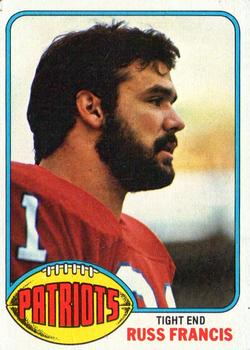
The next tight end of the 1970s to speak highly of is Russ Francis, who like Raymond Chester played for more than one team, and eventually returned to his original team. Francis came into the league as a member of the New England Patriots in 1975. He was 6-6, 240, and was loaded with prototypical talent.  Francis showcased his abilities right from the get-go, as he caught 35 passes for the run-happy Patriots in his rookie season. 

He would end up playing a total of eight and one-half years in New England (1975-80 and 1987-1988) and five and one-half seasons in San Francisco (1982-1987), where he was a member of the 49ers’ Super Bowl XIX Championship team. Francis finished his 13-year pro career with 393 receptions worth 5,262 total yards and 40 touchdown catches.  Probably the only thing that has kept him out of the Hall of Fame were his numerous injuries throughout his career.

Big Jim Mitchell of the Atlanta Falcons is the next tight end on this list, and believe me, he was a load.  He stood 6-1 and weighed 234, but if he hit you, it usually felt like he weighed even more than that.  But Mitchell was much more than just a blocking-type of tight end. He also had a great pair of hands.  He ended up catching 309 passes for 4,358 yards by the time that he retired following the 1979 season.  He also scored a total of 31 touchdowns as a pro.  

He did not have the opportunity to experience much winning during his 11-year pro career (all with the Falcons). But when he finally got a chance to play in the NFL postseason in 1978, Mitchell was a vital weapon for his team. In Atlanta’s first playoff game ever against the Philadelphia Eagles, Mitchell scored the first playoff touchdown in Atlanta history, as the Falcons prevailed, 14-13. Jim Mitchell is indeed one of the most underrated tight ends in NFL history.


The next tight end on this list of great tight ends enjoyed much more success than Mitchell. Jim “Mad Dog” Mandich of the Miami Dolphins (6-2, 224) was fortunate to be a member of the right team at the right time. But it is important to note that he earned the right to be there. The Dolphins of the early 1970s were one of the strongest teams in the NFL at that time, as evidenced by their triumphant consecutive World Championships in 1972 and 1973. 

Even though Miami was primarily a running team, Mandich contributed greatly to his offense by catching practically everything that his quarterbacks threw at him. Like most of the tight ends on this list, Mandich rarely dropped a pass. He finished his nine-year career with 121 receptions, worth 1,406 yards.  He also scored 23 touchdowns, and he only fumbled once as a pro. Mandich completed his playing days as a member of the Super Bowl XIII Champion Pittsburgh Steelers in 1978, thereby giving him three Super Bowl rings.


The next great tight end on this list was a hybrid of sorts. He was a man who played both as a tight end and as a wide receiver all throughout his 13-year NFL career. Rich Caster (6-5, 228) was probably the fastest player on this list.  He played for four different teams, including the New York Jets, the Houston Oilers, the New Orleans Saints, and the Washington Redskins. 

But it was with the Jets that most pro football historians and fans remember him. Caster was like a gazelle. Once he caught the ball, and if he had a step on a defender, chances were good that he was not going to be caught. He pulled in a total of 322 passes during his career, worth 5,515 yards. He averaged over 20 yards per reception in three different years (1970, 1972, and 1977), and he scored a total of 45 touchdowns. Rich Caster finally claimed that most treasured of items – a Super Bowl ring – as a member of the 1982 Redskins.  


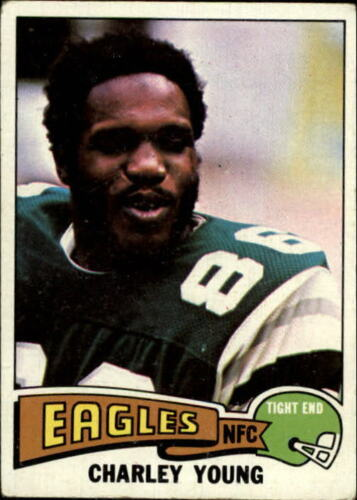
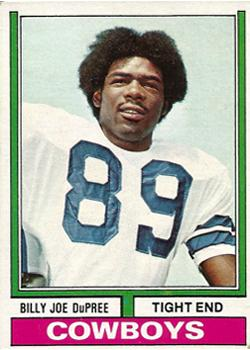
The next two great tight ends both came into the league in the same year (1973), and both had outstanding rookie seasons. Charle Young of the Philadelphia Eagles and Billy Joe DuPree of the Dallas Cowboys were similar in their physiques. Young (6-4, 234) had perhaps the biggest hands of anyone in this list of great tight ends. DuPree (6-4, 225) was a strong blocker who was also adept at playing on various special teams units for the Cowboys. 

Young would be named the league’s All-Pro tight end as a rookie, something that rarely happens in the NFL, regardless of what position a player plays. He eventually wore the uniform of four different teams (Philadelphia, the Los Angeles Rams, San Francisco, and Seattle) during his 13-year career. By the time that he hung up his shoulder pads for good, Young had accumulated 418 pass receptions worth 5,106 yards and 28 total touchdowns. Young played in Super Bowl XIV with the Rams (a 31-19 loss to Pittsburgh) and in Super Bowl XVI with the 49ers (a 26-21 victory over Cincinnati).

Billy Joe DuPree played in three Super Bowls with the Cowboys (X, XII, and XIII), winning one (XII). He spent his rookie year playing on special teams almost as much as he played tight end. He even managed to block a punt against the New York Giants which was recovered in the end zone for a touchdown by one of his teammates.  

But DuPree’s true worth to Dallas was at the tight end position. Like Young, DuPree also owned a pair of large hands, which were quite helpful in catching passes. He caught 267 passes for 3,565 yards and 42 total touchdowns during his 11-year career, all with the Cowboys. He was not the fastest tight end on this list, but his sturdy frame usually meant that it was going to take more than one defender to tackle him. 

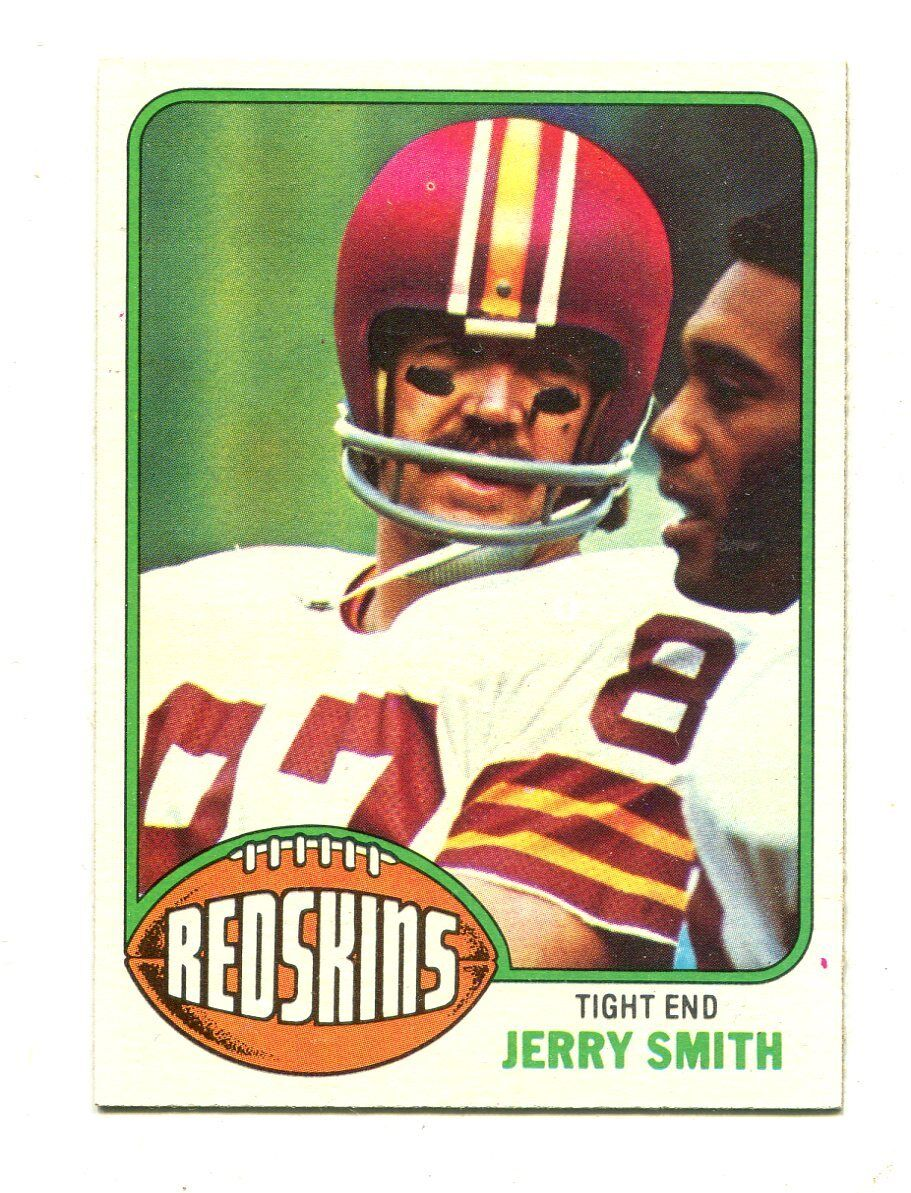
Jerry Smith of the Washington Redskins is the next player on this listing of great tight ends who are not currently a member of the Pro Football Hall of Fame. Smith did not possess large hands, but he certainly owned a pair of sure hands. He was one of the most dependable pass catchers in the entire league during the late 1960s and throughout the 1970s. He was one of those great “team players” that were prevalent in the era in which he played.  

He would accept any role that his coaches required of him, from being a starter, to being a backup, to going on special teams…all without complaining one bit.  That is commendable in any period. Smith finished his 13-year pro career (all with the Redskins) with 421 receptions, worth 5,496 yards, and an incredible 60 total touchdowns. Smith certainly knew how to navigate zone defenses and get open, didn’t he?  In the middle of his career, Smith was a valuable member of Washington’s NFC Championship team of 1972.’


The final great tight end on this list is former Denver Bronco, Riley Odoms. The Broncos had what appeared to be an extra offensive lineman in Odoms (6-4, 230), whose blocking ability was as good or better than any other tight end listed above. But like Jim Mitchell, Odoms also was nimble in his moves, and he could either plow through attempted tacklers, or gingerly sidestep them. 

Few are the pass catchers in pro football history who are proficient at both of those abilities, but Odoms was certainly one of them. Indeed, it was Odoms’ moves in the open field that enabled him to register some exemplary statistics throughout his 12-year career (all with Denver).  Odoms would catch 396 passes for an incredible 5,755 yards.  He also crossed the goal line 41 times for the Broncos.

Will any of the tight ends listed above ever get enshrined in the Pro Football Hall of Fame?  Considering all the competition in the Veterans category, it would indeed be difficult for any of the above players to don a gold Hall of Fame jacket anytime soon. But that will not erase the fact that these men have done great honor to their position of tight end, and they have greatly enhanced the stories and histories of their teams throughout their playing days.

Joe Zagorski is a member of the Pro Football Writers of America and the Pro Football Researchers Association.  His upcoming book on the 1973 Buffalo Bills, entitled The 2,003-Yard Odyssey: The Juice, The Electric Company, and an Epic Run For a Record, will be released later in 2023 by Austin-Macauley publishers (New York).

Monday, June 5, 2023

Gene Brito—A Great Player, an Even Better Man

By John Turney 
  
When a player is up for the Hall of Fame he has the support of his team in terms of trying to sway those who vote. 

Or it could be a family trying to get their loved one into the Hall. There has even been an entire fan base holding a rally to persuade the voting committee.

But only Gene Brito had a sitting U.S. President to lobby for his Hall-of-Fame induction.

It happened in the Summer of 1971 when President Richard M. Nixon, just prior to a historic trip to China, visited Canton to attend the Enshriment ceremony and festivities.

On his tour of the Hall, Nixon suggested that Gene Brito, a defensive end who had played in California in college and in Washington D.C. as a pro, was worthy of receiving a bust. "As a defensive end he was the best", proclaimed the most powerful man on the planet.

Over the next several years the voters didn't act in accordance with the soon-to-be impeached 37th president. In fact, Brito, in the ensuing decades, never made the Final 15 to have his case discussed, not even by the 2020 Centennial Blue Ribbon Panel.

So, was Nixon right about Brito? Is he deserving of the Hall? 

The answer is yes and it's not a particularly close call. Hopefully, the Hall's senior committee will give him a look in the near future.

Brito was not only was he Nixon's favorite player he was also John F. Kennedy's and Harry S. Truman's as well. Noted New York Times columnist Art Daley noted that Brito was the only thing Truman and Nixon ever agreed on.

Why the bipartisan support?

Brito touched people as few did. All who met him took to him - he was a beloved.

On one occasion he was carried off the field by the fans. Upon retiring he was presented with a brand new Pontiac Bonneville that had been paid for by fans' donations, a dime and a dollar at a time.

Three years later, when a crippling disease befell him, his fans committed to raising $100,000 to help with medical bills and other expenses.

Additionally, a Los Angeles-area contractor recruited a group of tradesmen - plumbers, electricians, etc., to donate materials and labor to construct a large addition to the Brito home - a room large enough to accommodate his wheelchair, a hydraulic lift, a king-sized bed and other niceties to make his living with his condition more tolerable.

Moreover, the Philadelphia Eagles' players voted him a full share of their 1962 Playoff Bowl money. All Brito ever did to the Eagles was dirty up their quarterbacks yet they honored him.

Yes, Brito was THAT guy - the kind of guy who people would embrace in his hour of need.

The Hall of Fame, though, is not for being a good man among good men, it is for being a great player among great players.

Brito was THAT guy, too.

Hall-of-Fame defensive end Gino Marchetti, when asked who were the best defensive ends of his era, opined, "The guy I respected the most was a guy in Washington named Gene Brito. He was a light guy, a fast guy, a quick guy - he had a lot of moves", later adding, "Nobody was quicker or faster off the ball than Gene."

Fourteen-year defensive tackle Dick Modzelewski, who played with and against Brito, concurred, "I thought I was quick off the ball but I thought he was offside all the time he was so quick"

Norm Van Brocklin also praised Brito, "He's the best player on that team", noting that "he knocks you down while to the ball is in play, not after the whistle." 

The Dutchman's claim was evidenced by the fact that Brito was only called for one penalty in his Washington career - a false start. He never was flagged for a personal foul such as roughing or a late hit.

Before there was a term "high-motor" Brito personified it, "Gene was the goingest. He just kept coming and coming and coming", said Harland Svare.

The Times' Daley wrote, "There was an extraordinary aspect to the Brito performances. He was a 230-pound bulldozer of a pass rusher. He brushed aside or knocked down blockers. He stampeded over everyone on his way and he as sheer murder on quarterbacks."

In one dominant performance, Brito was harassing Steelers quarterback Jim Finks to the point that he told his tackle Frank Varrichione, "You've got to stop Brito. I don't care how you do it even if you have to break the rules and hold him. Varrichione said, "That doesn't work either. I've already tried holding."

George Preas, another tackle, who like Varrichione, had high praise for the Loyola grad, reported that Brito was "in a class by himself." Expounding, "Gene Brito is the toughest (I face). He's the only player I have trouble blocking ... He's quick and knows all the tricks. What makes him all the harder is that they don't give him a specific assignment. They just turn him loose ... most other players you can figure the way they will play. He's likely to do anything anytime."

Want more? How about Lenny Moore?

The Colts Hall-of-Famer added that Brito was a "Great defensive end" and that he was "Very, very quick, very fast. He wasn't big by the standards of a defensive end but, man, you had to keep a back in the backfield to pick him up. He was as quick as a cat."

Mike McCormack, a Hall-of-Famer himself, has always maintained that the best defensive end he faced was Gino Marchetti but when he expands the list to the top few Brito is on it. 

Pro Bowl guard John Gordy began his career as a tackle but after being embarrassed by Brito in his first pro game he was moved inside. Recounted Gordy, "He was on my back all game ... he just killed me. Bobby Layne kept yelling at me in the huddle, 'Keep that guy off me.'"

In 1969 the Football Writers' Association of America released an All-time Pro team and three defensive ends were named—Deacon Jones, Gino Marchetti and Brito.

Don Klosterman a collegiate teammate said he was the "most intense player he ever saw", and called him "Mean" Gene.

Without question opponents and teammates thought Brito has Hall-of-Fame chops but at eighteen he didn't look like someone who ever would.

Enlisting in the Army right out of Lincoln High School in East Los Angeles the handsome 5-11, 163-pound Latino earned the rank of Staff Sergent in the Army Paratroopers and early in 1945 was part of a combat drop into the Philippines where there was stiff Japanese resistance.

That experience was enough to cause Brito nightmares for the rest of his life in what was most assuredly what would be called post-traumatic stress disorder.

After his military service, the Los Angeleno returned home and excelled at CYO sandlot football, was spotted by collegiate scouts and was offered an athletic scholarship to Loyola University. 

There he earned a BA and lettered in four sports with the most success in football. As a two-way end. 

Washington drafted him in the 17th round of the 1951 draft. The then-6-1, 216-pounder made the team beginning the season on defense but was moved to the offensive side of the ball and played well enough for his coaches to suggest that had they played him all season as a receiver he would have been a strong candidate for Rookie of the Year.

The next year he played mostly offense but was always hounding coach Curly Lambeau to put him in on defense and got snaps there - Lambeau thought Brito was too slight to play defensive end.

In 1953 Gene got up to 230 pounds and got his wish, he was a defensive end and his defensive career took off, making his first of five Pro Bowls.

Wanting to be closer to his off-season job teaching and coaching Brito demanded to be traded to the Rams. Team owner George Preston Marshall wouldn't accommodate him and that, coupled with friction he and other teammates had with coach Curly Lambeau, caused Brito to take his wares to Calgary and played twelve-man football. He played for the Stampeders, making the All-Western Interprovincial Union All-Star Team - the league's (not yet the CFL) version of an All-Pro team.

Brito returned to Washington in 1955, putting on hold his desire to play in Los Angeles, and was a consensus All-Pro, the first of four consecutive years. The Touchdown Club of Washington D.C. named him the league's top player. 

With his return and full-time commitment to a 4-3 scheme the defense was one of the best in the NFL after being an absolute disaster in 1954 and after many years of being second division, Washington went 8-4.

They beat the Cleveland Browns for the first time since the Browns joined the league and in the game, Brito stole the ball from Otto Graham to set up a game-winning score. He did something similar a few weeks later against the 49ers this time setting up the only touchdown in a 7-0 win.

Brito retired in 1958 to finally pursue teaching and coaching underprivileged kids, taking a job at his high school alma mater.

To his surprise, his old team finally traded him to the Rams and where could keep his teaching job and play football.

Dream realized. He'd told the media he wanted to play forever.

In his first year in L.A. he broke an ankle but in 1960 returned and was a second-team All-Pro (UPI) and would have been a great candidate for Comeback Player of the Year, had that award existed.

But forever was too short for the gallant man.

In 1961 his world collapsed. Suddenly and without warning he developed a muscular disease that robbed him of his strength and eventually his life.

In the preseason he complained of weakness, he could not get off the ball, he just didn't have "it". After a battery of doctor's tests he was diagnosed with an ALS-type disease which acted quickly, within weeks paralyzing his legs and partially his arms. 

It progressed to the point that his lungs would not work on their own and less than six months after his symptoms began he had to be put into an iron lung with the worst possible prognosis. 

His death seemed imminent and Catholic last rites were administered.

However, over the next year, the disease relented and he made a partial recovery and it was big news in the media - a national sports story. 

John F. Kennedy sent him a telegram reading, "Your courage is now an inspiration to all men and all nations."

The reprieve didn't last, though, and in 1965 he was gone. 
Again, sports sections across the country covered his passing. His life and legacy were recounted in the most glowing of terms.

It is unknown if he'd have played another two or four years, perhaps completing a twelve- or fourteen-year career and if the lack of longevity was the key factor in his being overlooked by Hall voters.

Longevity in a player's career was a part of the mix when deciding if a player was worthy of the Hall of Fame. So was being on a winning team.

During the years Brito would have had the best chance of getting a Gold Jacket defensive ends Andy Robustelli, Gino Marchetti, Deacon Jones, Willie Davis and Doug Atkins all were getting theirs. All played twelve seasons or longer and all but Jones were part of a championship.

Brito was stuck on some poor teams and was robbed of his chance to play longer.

If a short career was an issue the committee needs to look no further than Lee Roy Selmon who played nine years. Add to that recent inductees like Tony Boselli, Terrell Davis and Ken Easley who all had shorter careers than Mean Gene.

Comparing postseason honors bolsters Brito's case - he was a consensus (made the majority of the wire service teams) All-Pro four times. There are 23 defensive ends in the Hall of Fame and only five were consensus All-Pro more often - Reggie White, Bruce Smith, Gino Marchetti, Deacon Jones and Jack Youngblood.

It's more than ends Howie Long, Lee Roy Selmon, Jason Taylor, Doug Atkins, Chris Doleman, Richard Dent, Charles Haley, Fred Dean, Ed Sprinkle, Elvin Bethea as well as others.

He went to more Pro Bowls than Len Ford, Dent, Joe Klecko, Dean and Sprinkle and the same number as Willie Davis and Haley and that gives zero consideration for his Canadian All-Star season.

It is worth noting that there was only one Canadian-born player of the 24 players on that All-Star team, it was full of former NFL players so making it was not an accomplishment to be dismissed as having little value. There were good players who didn't get voted to the team.

All this exhibits that it's time that the current voters revivify Brito's candidacy. 

If they do and allow him one of the senior slots and the committee as a whole concur Genaro Herman Brito would be just the seventh Latino with a bust in Canton and his compelling life story will have its crowning jewel. 

Then, someone should make a Hollywood film about the skinny kid from East L.A. who was a paratrooper in World War II, an all-around high school and college athlete, a man committed to social work in his home community, someone who was adored by fans and admired by Republican and Democrat Presidents alike and most of all - a good man.

What Are the Top Single-season Performances by a Running Back in Bears History?

 By John Turney 
Red Grange and Bronko Nagurski
The Chicago Bears have been around forever and they have had some of the best running backs ever. Though Jim Brown is usually considered the best running back in NFL history a strong case can be made that Walter Payton was a more valuable player because he did more things well.

He may not have been quite as good a pure runner as Brown, but he blocked better, was a better receiver and could even throw a touchdown pass once in a while.

So, what was Payton's best season? Was it 1985 when the Bears won the Super Bowl? How about 1977?

And in either case, where does it rank amongst other single-seasons by Bears runner over the last one hundred or so years?

By taking one "career year" from each player - their best season - and comparing it to the others' here are the best individual seasons by Bears runners.

The criteria include statistics, impact on the team, postseason honors and scouts' rankings where possible and some eye test as well.


24. Curtis Enis, 1999—The fifth overall pick in 1998 can only be considered a bust but in his second season he had 1,256 yards from scrimmage but he's only here because this list goes twenty-five deep.

23. Rashaan Salaam, 1995—The UPI NFC Rookie of the Year rushed for over 1,000 yards and ran for 10 touchdowns. Like Enis, was a first-round pick that did not pay dividends for the Bears.

22. James Allen, 2000—When Curtis Enis was clearly not getting the job done Allen stepped in and ran for 1,120 yards.

21. Raymont Harris, 1997—Harris named himself the "Ultraback" because he felt he was versatile enough to do it all. He did some of it. 

In 1997 he ran for 1,033 yards and ten touchdowns and caught 28 passes in 13 games before he severely injured his leg and ankle. He may have been more effective in 1994 when he was playing fullback, though, he was kind of forced into lead back role but did well but could not stay healthy.

20. Tarik Cohen, 2018—A third-down back in the Darren Sproles/James White mold. In his career year, he caught 71 passes and totaled 1,169 yards from scrimmage and led the NFL in punt return yardage. 

19. Bob Margarita, 1945—A rushing and receiving threat he averaged 89.1 scrimmage yards a game. He also picked off six passes as a two-way player. Outside Sid Luckman, Margarita was probably the best player on a rare bad Bears team.

18. Matt Suhey, 1983—A little love for Walter Payton's lead blocker. He had career-highs in rushing attempts and rushing, rushing touchdowns, receptions and in receiving yards and in yards from scrimmage.

In the last five games of the season the 217-pound fullback had three games that he averaged 5.9 yards a carry.

17. Roland Harper, 1978—A little more love for a Payton blocker. He was eight yards from the Bears having two 1,000-yard rushers in the same season, finishing with 992 rushing yards. He also had 430 yards on 34 receptions. 

On the 26th of November, he ran for 144 yards against the Buccaneers - the only 100-yard game of his career.

16. Anthony Thomas, 2001—The "A-Train" was the AP NFL Rookie of the Year, his best as a pro. The second-round pick out of Michigan ran for 1,183 yards and set career highs in rushing receiving, yards from scrimmage. He also didn't fumble. 

On a 13-3 team he had an 188-, 173- and 160-yard rushing days and scored a touchdown in each of them. All were victories. 

15. Thomas Jones, 2005—A workhorse, he rushed 314 times and gained 1,335 yards and ten touchdowns. He was an alternate to the Pro Bowl. The Bears finished 11-5 and made the playoffs.

The following season the Bears were better, going 13-3 and winning the NFC but Jones had help that year with Cedric Bensen sharing the load in 2006.

14. David Montgomery, 2020—The 5-11, 224-pound back ran for 1,070 yards and caught passes for 438 more. His 1,508 yards from scrimmage are 19th best in franchise history.

13. Jordan Howard, 2016—A Pro Bowler as a rookie Howard ran for 1,313 yards, which is twelfth in team annals. he was the NFC Player of the Week in week eight and was the NFC Rookie of the Month for December.

12. Willie Galimore, 1961—In his career year Gallimore set career highs in rushing and receiving and yards from scrimmage, but he was more than about numbers—he was an eye-test guy.

He was an elusive and shifty runner that rivaled players like Lenny Moore and Hugh McElhenny for the league's most exciting player. 

Still, in 1961 (which edged out 1958 as the selection) he ran for 707 yards on 153 carriers and caught 33 passes for 502 yards - all were career-highs. 

11. Harry Clarke, 1943—Clark led the NFL in yards from scrimmage, ran for over 500 yards and caught passes for over 500 yards. He was a first-team All-Pro. He was also a capable return man and adding in yards from punt- and kick returns and interceptions he led the NFL in all-purpose yards with 1,607 and in yards from scrimmage (1,091 yards).

Clarke was held to 21 rushing yards in the NFL championship game against Washington but did catch a couple of touchdown passes in a 41-21 romp.

10. Bill Osmanski, 1939—In his rookie season Osmanski was All-Pro and went to the first iteration of the Pro Bowl.  He rushed for 699 yards to lead the NFL and ran for seven touchdowns and had a 5.8 yards per carry average. 

They didn't have a Rookie of the Year Award then but there is a good chance the Bears' first-round pick out of Holy Cross would have won it had there been.

9. George McAfee, 1941—A jack-of-all-trades, McAfee had a few years that could have been picked but 1941 was probably the top season. He was a first-team All-Pro and had his best rushing year. 
He scored rushing, receiving, on a kick return, and a punt return and threw a touchdown pass. 

He also intercepted six passes. McAfee typified the backs of his era that did a little bit of everything.

The Bears won the NFL title, winning a playoff game along the way and in those two games McAfee was the leading ground gainer with 200 yards including 119 in the playoff game versus the Packers.

8. Neal Anderson, 1989—Walter Payton's heir apparent did his best, but no one could live up to what Sir Walter did. In his career year, Anderson was NFC Offensive Player of the Month for September went to the Pro Bowl and was All-NFC.

He rushed for 1,275 and hauled in 50 passes and had 1,709 total yards (twelfth in Bears annals) and scored 15 touchdowns.

Of course, 1988 and 1990 were considered, the team was better in both seasons but it was injuries to the defense in 1989 that caused the slump, the offense was probably at its best in 1989, led by Anderson.

7. Matt Forte, 2013—A pretty consistent player with several excellent seasons but 2013 is probably the best. he had 1,913 yards from scrimmage, rushed for a career-high 1,339 yards and caught 74 passes for 594 yards. 

He was a poor man's Marshall Faulk or LaDainian Tomlinson.

6. Rick Casares, 1956—The 6-2, 226-pounder out of Florida led the NFL in carries, rushing yards and rushing touchdowns. He was a consensus first-team All-Pro and finished third in the Player of the Year voting. His 1,126 yards and 12 rushing touchdowns set then-team records not broken until Gale Sayers joined the club.

5. Beattie Feathers, 1934—The NFL's first-ever 1,000-yard rusher, he, of course, led the league in rushing yards and tied for the lead in rushing touchdowns.  The former Tennessee Volunteer led in yards from scrimmage as well with 174 receiving yards on six catches. 

He was a consensus first-team All-Pro. The Bears were 13-0 but lost the title game to the New York Giants marring one of the best-ever seasons by a running back.

Oddly, he gained 1,004 rushing yards in 1934 and 976 the rest of his career. He scored nine total touchdowns in 1934, rushing and receiving and eight the rest of his career.

Talk about a one-year wonder.

4.  Red Grange, 1930—Not much film or many stats exist but Grange was a consensus All-Pro in both 1930 and 1931. He hurt his knee in 1927 and most accounts say he was never the same after but he was still considered an all-time great. He played more and more defense as he got older but was still carrying the ball a lot.

In the limited numbers that exist Grange was among league leaders in touchdowns in both seasons but near the top in 1930, so that is the pick.

3. Bronko Nagurski, 1934—The big fullback out of Minnesota was legendary and he had three consecutive seasons that could be considered his career year. We went with 1934. 

In 1932, '33, and '34 he rushed for about the same amount of yards (he was top four in the league) in all three years but in 1934 he scored his career high in touchdowns. But the deciding factor was he had to share the ball with rookie Beattie Feathers so all things consider Nagurski's career year, perhaps an MVP year, if there had been such an award, was 1934.

2. Gale Sayers, 1966—It came down to the Kansas Comet's rookie year or his sophomore NFL season. Both were terrific. Both were over 2,200 all-purpose yards. 

In 1965 he scored more touchdowns but ultimately 1966 was chosen because it was his career-high in yards from scrimmage (1,678), rushing yards (1,231). He averaged 5.4 yards a carry caught 34 passes and fumbled just twice. He also took back two kicks for touchdowns.

He was a consensus first-team All-Pro and naturally a Pro Bowler and was the week twelve NFL Offensive Player of the Week for gaining 172 yards rushing. He also closed the season with a 197-yard rushing day.

1. Walter Payton, 1977—Every once in a while there is a player who has maybe ten career years so picking one is difficult. Payton is that way. You don't want to be a cliche and pick the most obvious but by the same token, you don't want to do a hipster pick just to be different.

Certainly, 1979-80 and 1983-84-85 would be in the running and with 1985 being the runner-up but in this case, it has to be the obvious season - 1977. 

Sweetness won the rushing quadruple crown, leading the NFL in attempts, rushing yards, rushing average, and rushing touchdowns.

He was a unanimous NFL MVP (AP, PFWA, NEA) and NFC Player of the Year (UPI) and of course unanimous All-Pro plus All-NFC and Pro Bowl selections as well.

With Payton leading the way the Bears even made the playoffs, something they had not done since 1963. 

Payton's abilities would translate well to today's game because he not only did it all, he did it all so well.