Sunday, August 23, 2020

Two Favorites With Similar Career Arcs—Jerry Robinson and Hugh Green

By John Turney

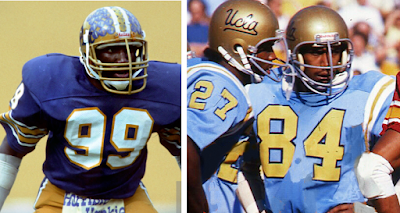
In my youth, there were two collegiate linebackers who struck my fancy for various, boring reasons not interesting to readers but nonetheless, I watched these guys as much as possible, rooted for them and when they entered the NFL there was an emotional vested interest in seeing them succeed.

But, given their college success, they didn't reach the pinnacles that were hoped for, though both had fine, worthy careers.

Jerry Robinson and Hugh Green would still make most All-Time college teams. Robinson was a three-time consensus All-American at UCLA and Green was also a three-time  Consensus All-American at Pitt. It is difficult enough to be an All-American, but both making it as sophomores and juniors as well speaks to their dominance on Saturdays. 

Robinson was the 21st overall pick in the 1979 NFL draft and Green, in 1981, was the seventh overall pick. 

Robinson's career total of 468 tackles, set a UCLA record. He ranked first, second, and third in tackles per season with 161, 159, 147, respectively. The Downtown Athletic Club of New York named him Linebacker of the Year in 1977 and 1978. He was 10th in the Heisman Trophy vote that year. 

In 1980, Green won several major college player of the year awards and finished second in the Heisman Trophy balloting, an amazing achievement for a defender in that era.  Green left the university with 460 tackles and 53 career sacks in his college career. John McKay said, "Hugh Green is the most productive player at his position I have ever seen in college".

Also in a parallel fashion both garnered All-Pro/ProBowl selection early in their career.

Robinson was Second-team All-Pro in his second season a First-team All-Pro in his third and a Second-team pick in his fourth season while Green was All-Pro in his second- and third-seasons.

Then, again, similarly neither were ever honored again in their careers, though both were solid fuctional pros and ironically both were traded while both should have been in their prime. In 1985 the Raiders send a second-round pick to the Eagles for Robinson and the Dolphins sent a first- and a second-round pick to Tampa Bay for Green.


The issue for both players is that they were "tweeners" in terms of size. Both were undersized in the pros for their positions. 

Robinson began as an outside linebacker in a 3-4 defense and it just was not suited for him. Had he come into a 4-3 system like in the 1970s or in the 1990s to now, he'd have been great. He had speed and tackling ability, but as long as he could have put on some weight—to 230 to 235 (he was less than 220 in college) he'd have been fine, like an Isiah Robertson in the 70s or a Seth Joyner in the 90s or a Lavonte David now. 

In 1982 Dick Vermeil moved Robinson to inside linebacker, where again, though he did put on some weight, he was still undersized for that role. He played well, but the pounding wore down on him and he was less effective as the years went by, leading to the trade to the Raiders.

There is was a solid performer, a starter (after not playing much his first year there) but he was not a top or elite player as he was in 1980-81. In 1986 he was again effective, picking off four passes and in 1987, playing both outside 'backer and inside he had a career-high 4.5 sacks. 

He was versatile but he was still a no-frills player someone who is on the field but just not making elite or impact plays year-in and year-out after those seasons. However, one note is that he did force some fumbles with the Raiders and ending with 22 for his career, a goodly number.

He ended his career, after 13 NFL campaigns with over 1,000 tackles and 14 sacks and those 22 forced fumbles and a dozen picks. 

He may not even make the Pro Football Researcher Association's Hall of Very Good, but he was a fine player, just not the perennial All-Pro he might have been if he could have played in, say, Wilber Marshall's scheme with the Bears or maybe in Dallas or Washington (the three teams that stayed with the 4-3 in the 1980s).

As mentioned, Green was undersized as well. In college, he was a stand-up defensive end in a 5-2 scheme and was thought to be someone who might gain some weight and strength and be a smaller/sack master. In 1980 there was a Falcon weakside linebacker who was slightly smaller than Green (Joel Williams, 6-1, 222) who had 16 sacks. So, at the time while not ideal, it was thought Green would do the same or more.

However, in New York, there was a fellow named Lawrence Taylor who was 6-3, 243, and as a rookie was doing all the things Green was supposed to do and in 1981 it was L.T. who was All-Pro and the Defensive Rookie and Player of the Year.

Green was used as a blitzer some but was asked to do more coverage that Taylor. Partly because he had the skill set to cover but also because NFL tackles would just not be as challenged with Green and his 225 pounds as college tackles. So, as a blitzer, he was just not going to be an elite sack/pressure guy due to his lack of size though he was still an elite player in terms of all-around play 

By 1984 Green was dealing with injuries caused by an automobile accident and in 1985 he had other issues. He became disgruntled with the team's regression and wanted out. 

The Dolphins were all-to-glad to get Green. They were less than a year removed from losing the Super Bowl in large part because of defense woes, they were more of a well-coached hustle-type defense than one stacked with elite players. 

Green totaled 5 sacks in his first 11 games with the Dolphins and all was set for a recharged Green. 

But early that year Green (off to a fast start) ruptured a tendon in his knee and it was thought to be career-threatening—

Dr. Indelicato was prophetic. Green came back but was just not the same. It was not until 1988 that he was able to become a starter again and now, like Jerry Robinson, he was a fine player but not what he was with the Bucs. He could still tackle, rush some, and was always (like Robinson) a fierce hitter but he was not going to be an All-Pro again, just as the doc said.


So there you have it, a pair of three-time All-Americans who each had a few All-Pro/Pro Bowl level seasons who were fine pros with excellent careers but just were not able to maintain that elite level of player for their entire NFL careers.

I salute both anyway.

And no one asked, but since I mentioned the College All-Time team, here is mine dating from 1960 to the present. This is based on college careers, not pro personnel reports, and so on. 

Offense
QB— John Elway, Stanford 
RB— Archie Griffin, Ohio State 
RB— Herschel Walker, Georgia 
RB— Tony Dorsett, Pittsburgh 
WR— Tim Brown, Notre Dame 
TE— Keith Jackson, Oklahoma 
T— Ron Yary, USC 
T— Orlando Pace, Ohio State
G —John Hannah, Alabama 
G— Greg Roberts, Oklahoma
C— Dave Rimington, Nebraska 

Defense
DE— Hugh Green, Pittsburgh 
DE— Ted Hendricks, Miami (FL) 
DL— Lee Roy Selmon, Oklahoma 
DL—Bubba Smith, Michigan State 
MG—Tony Casillas, Oklahoma
LB— Richard Wood, USC
LB— Jerry Robinson, UCLA 
CB— Deion Sanders, Florida State
CB— Charles Woodson, Michigan 
S— Kenny Easley, UCLA 
S —Jack Tatum, Ohio State 

Specialists
K— Sebastian Janikowski, Florida State 
P— Ray Guy, Southern Mississippi
Ret— Johnny Rodgers, Nebraska 

Friday, August 21, 2020

The Consensus 1969 All-Pro Team (Not the Separate All-NFL and All-AFL Teams)

 By  John Turney

Sometimes, even among NFL researchers and historians there is a disconnect in All-Pro teams for the 1960s (and from 1946-49) in terms of All-Pro versus All-NFL and All-AFL (and All-Pro vs All-NFL and All-AAFC).

They have all been used interchangeably by most of us but they really are not. In the 1960s there were All-AFL teams and All-NFL teams for all ten seasons. However, starting in 1967 there were major organizations that picked combined All-Pro teams, selection players from both leagues 

In 1967, Murray Olderman picked the first kind of "major" All-Pro team—picking players from both leagues and in 1968 the PFWA and PFW did it, and then in 1969 most organizations finally did it.

Needless to say, it is tougher to make an All-Pro team than an All-AFL or All-NFL team thus it is a bit higher of an honor, worthy to be noted in our view. 

Here is the combined 1969 All-Pro team from the major organizations—

OFFENSE
Wide Receivers
Lance Alworth, San Diego (HOF, PFWA, NEA, PFW)
Fred Biletnikoff,  Oakland (PFWA, PFW)
Paul Warfield, Cleveland (HOF, NEA)

Tight Ends
Jerry Smith, Washington (PFWA, NEA)
Bob Trumpy, Cincinnati (HOF, PFW)

Tackles
Bob Brown, Los Angeles (HOF, PFWA, NEA, PFW)
Jim Tyrer, Kansas City (HOF, PFWA, PFW)
Winston Hill, N.Y. Jets (NEA)

Guards
Gene Hickerson, Cleveland (HOF, PFWA, PFW)
Walt Sweeney, San Diego (NEA, PFW)
Tom Mack,  Los Angeles (HOF)
Ed Budde, Kansas City (NEA)
Gene Upshaw, Oakland (PFWA)

Center
Mick Tingelhoff, Minnesota  (HOF, PFWA, NEA, PFW)

Quarterback
Daryle  Lamonica, Oakland (PFWA, PFW)
Roman Gabriel, Los Angeles (HOF)
Joe Namath, N.Y. Jets (NEA) 

Running Backs
Gale Sayers, Chicago (HOF, PFWA, NEA, PFW)
Calvin Hill, Dallas (HOF, PFWA)
Leroy Kelly, Cleveland (NEA)
Matt Snell, N.Y. Jets (PFW)

DEFENSE
Defensive Ends
Carl Eller, Minnesota  (HOF, PFWA, NEA, PFW)
Deacon Jones, Los Angeles (HOF, PFWA, NEA, PFW)

Defensive Tackles
Merlin Olsen, Los Angeles (HOF, PFWA, NEA, PFW)
Bob Lilly, Dallas (HOF, PFWA, NEA)
Buck Buchanan, Kansas City (PFW)

Middle Linebacker
Dick Butkus, Chicago (HOF, PFWA, NEA, PFW)

Outside Linebackers
Bobby Bell, Kansas City (HOF, PFWA, NEA, PFW)
Chuck Howley,  Dallas  (HOF, NEA, PFW)
George Webster, Houston (PFWA)

Cornerbacks
Willie Brown, Oakland (HOF, PFWA, NEA, PFW)
Lem Barney, Detroit  (HOF, NEA, PFW)
Mel Renfro, Dallas (NEA-S, PFW)

Safeties
Dave Grayson, Oakland (PFWA, NEA, PFW)
Larry Wilson, St. Louis (HOF, PFWA)
Johnny Robinson, Kansas City (HOF)

SPECIALISTS
Kicker
Jan Stenerud, Kansas City (HOF, NEA)
Jim Turner, N.Y. Jets (PFWA)

Punter
David Lee, Baltimore ( (HOF, PFWA, NEA)

Selectors:
HOF = Pro Football Hall of Fame (poll of the 24-man selection committee)
PFWA = Pro Football Writers of America (poll of members)
NEA = Newspaper Enterprise Association
PFW = Pro Football Weekly: All-Pro team (poll of NFL & AFL correspondents)
Note: The AP never picked a combined NFL/AFL team

Wednesday, August 19, 2020

Next Up—The 2021 HOF Contributor Nominee

 By John Turney

Final 12

According to published media reports the final 12 for the Seniors Committee Hall of Fame nominee for the Class of 2021 Ken Anderson, receiver Cliff Branch, running back Roger Craig, inside linebacker Randy Gradishar, defensive end L.C. Greenwood, outside linebacker Chuck Howley, nose tackle Joe Klecko, offensive tackle George Kunz, receiver Stanley Morgan, middle linebacker Tommy Nobis wide receiver, Drew Pearson, and cornerback Ken Riley.  

Coaches

The coaches list was composed of Don Coryell, Mike Holmgren, Buddy Parker,  Tom Flores, Clark Shaughnessy, and Dick Vermeil.

Drew Pearson and Tom Flores are the two who emerged and will almost certainly be voted into the Hall of Fame the day before Super Bowl Sunday. 

Contributors

The next nominee for the Class of 2021 is the contributor. which we think will be selected in a month or so, if past precedent continues. (Update: We're told the selection meeting will be August 25, not late September). 

Since only the HOF contributor committee knows who is eligible based on the preliminary lists, guessing who the nominee will be is difficult. But based on media reports and gaging support that way we will take a stab at it. 

Since the inception of the contributor's category, it has been dominated by owners, which is was NOT (it was written at the time) supposed to be.

But, when looking at this category one has to put owners first.

Owners

Robert Kraft, Bud Adams, Art Modell, Clint Murchison, Carroll Rosenbloom, plus others would some of the owners that will be considered and likely more. 

Kraft would be it, we'd guess if not for a little issue at a massage place in Florida. We'll guess he's out for now but will get in in the next cycle or two.  Murchison and  Rosenbloom are old schools and though both have all the credentials of some of the modern owners they always get left behind.

Modell has had a lot of chances and he just comes up short so we'd not guess him. That leaves Adams as the owner with the best shot this year. 

General Managers

The GM-Types might include Carl Peterson, Dick Haley, Joe Thomas, John McVay, Don Klosterman, and maybe Amy Trask among others.

Trask should win the Hall of Fame Pioneer Award, she's not Hall of Fame material as a general manager but her role as a pioneer ought to be recognized. 

We don't think any of these will be the selection.

Scouts

Next, there are "scouting types" and this is where it is interesting. Bill Nunn, Eddie Kotal, John Wooten, Mike Giddings, Lloyd Wells, Bucko Kilroy, or even Jack Vainisi have a shot. Nunn has been written about a lot as has Lloyd Wells. 

It is possible one of those two is the pick, likely Nunn, though Wells may have a slightly better resume but it is a close call—debatable either way. 

Officials

NFL game officials are also supposed to be considered as per the original Hall of Fame charter. Art McNally, Jerry Seeman, Jim Tunney, Jerry Markbreit, and Norm Schachter are the ones who we immediately think of. Ben Dreith and Red Cashion also seem to have the "right stuff" in terms of credentials to be considered for the Hall of Fame. Our preference might be Tunney but McNally gets more ink.

Others

Two we like that are long shots are Seymour Siwoff and Ralph Hay (top credential is being an NFL co-founder. We've supported Siwoff because of his contributions to the game off the field and isn't that one of the major things this category is about?

Putting in owners and general managers in this category is kind of a backdoor in some ways because many previous owners and GM-types got in without needing a special category. We'd rather see officials or a scout or, yes, a statistician get this slot on occasion. 

If you like football statistics, fantasy football, or analytics you would have them without the efforts of Siwoff and his company Elias Sports Bureau, you just wouldn't, he did so much for the "left brain" part of the game it is hard to list the accomplishments.

That said, we'd be happy and shocked if he emerged from this category (if he's even nominated!).

There are likely others—media types (Maybe a Roone Aldredge or Chris Berman) or public relations types but they've never gotten much traction before. Maybe someday one or two might emerge but for them the honor of "just being nominated" may have to suffice. 

So, with Kraft on the back burner for another year or two, it is a good year for McNally or one of the scouts (Nunn, Wells, Kilroy, Kotal, Giddings) and really it is a special chance for Siwoff due to fact that most of the big-hitting contributors have gotten in recently leaving some of these with decent but not, let's call it "stupendous" resumes.

Who we'd pick—Siwoff.

Our prediction—McNally or Nunn. 

Gun-to-head prediction? Nunn.

Hall of Fame Wide Receiver Chart

By John Turney

As a way to organize the things that are measurable for a Hall of Fame candidate, we use charts to order things we think the HOF voters look at when evaluating a player.

We divide them by position. Here is our current wide receiver chart—
Chart credit:  Pro Football Journal
We list the years and games played to reflect longevity, the percentages of games played and started to measure when they got their starting positions and how often they missed coming out of the bell.

We list First-team All-Pros, Second-teams as well as All-AFC and ALl-NFC and Pro Bowls. Also, All-Decades, and any Most Valuable Player awards, both major and minor as well as player of the year awards. Here, for wide receivers, we put gross statistics as well as per-16 game stats.

Black ink and grey ink indicate how often a player led the league (black ink) or was in the top ten (grey ink) in a major statistical category for their position. And finally, championships.

Intangibles like film study or "testimonials" from opponents are included. They just cannot be measure and then broken down by era. 

Nonetheless, we thought you'd like to see a complete chart with things we though can be displayed in this form. Of course, there are more things, as we mentioned, but this is the "measurable" piece of the Hall of Fame puzzle. 

Tuesday, August 18, 2020

Drew Pearson Will Finally Be the 'NFC Bookend' to Lynn Swann in the HOF

 By John Turney

Earlier today Rick Gosselin, a Pro Football Hall of Fame voter and member of the seniors committee tweeted this:

You can see there are a large number of retweets and likes. That is likely because Drew Pearson, as a Hall of Fame candidate is polarizing—much like Lynn Swann was in the late-1980s through 2001, when he was finally inducted, after 14 times on the Final 15.

You see, Pearson's candidacy has come down to how Paul Zimmerman succinctly put in when advocating for Swann, "What do you want, quality of quantity?"

Dr. Z's point was it was clear and obvious that Swann's career numbers were not to the totals that some other receivers had attained. It was also clear and obvious to most people watched in his prime—Swannie was the NFL's best wide receiver. Even Howard Cosell got it, "Lynn Swann, the practically perfect wide receiver". Zimmerman knew that there was a dead-ball era in the 1970s in terms of passing offense, he also knew from watching and also talking to opponents and NFL personnel men that Swann was the best in the game and his made his big plays in the big game—which is what mattered to coaches and also to writers like Zim.

Similarly, Pearson played in the same era, and also similarly he was the NFC's version of Swann, maybe not in style but in production in big games—when it mattered. He was the dagger to the heart to playoff teams in playoff games versus the Cowboys. 

So, yes, the pick was polarizing because Pearson has one built-in enemy set of people—Viking fans. And another in the "anti-Cowboy" faction. Also, some are didn't like how he reacted when he didn't make the HOF in the Centennial Class when Harold Carmichael leapfrogged him in what seemed to be a player personnel evaluation case rather than a career evaluation as to worthiness to the Hall of Fame.

Additionally, there are the "stat nerds" who look at Pearson's (and Swann's) career receiving numbers and scoff because they are not of to current standards or even those of players in the 1960s. But that point has been well debated and smart football people know the context of that. 

Here is a sampling of Twitter on those points.

So, also, to be fair there are Pearson's supporters some of whom are the pro-Dallas faction who not only want Pearson in the HOF but Chuck Howley, Lee Roy Jordan, Charlie Waters, Ralph Neely, John Niland, Cornell Green, Harvey Martin, Too Tall Jones and any Cowboy who was a Pro Bowler or All-Pro a couple of times. (Some of those are worthy, but not all)

Others though get it. The mention that he was First-team All-Decade, was All-Pro in 1974, 1976, and 1977 and also garnered All-NFC picks in 1975 and 1978 (Second-team). And they also mentioned the Zimmerman theme: Big Plays in Big Games.

Since Swann got in the Hall of Fame to us, it felt unbalanced without Pearson because he was simply the NFC's version of Swann. Teams had to game plan for him, take him away because the knew he was as clutch a receiver as there was. When it mattered—he mattered.

So, many with echo the comments from Twitter we posted above, and some will show Pearson's laurels, the "alls" if you will. Here are a couple of nuggets we dug up:  When Pearson is elected, there will only be 10 HOF wide receivers who were First-team more than Pearson (He will be tied for 11th) and will be only one of NINE wide receivers who was First-team All-Pro three or more times, First-team All-Decade and also have at least one ring. Pretty good. 

If someone hated the Swann pick they will hate this pick by the HOF seniors committee. If they liked the Swann selection then they will love this pick. It is in line with what we discussed recently HERE, he passes the "film test" with flying colors even if the "stat" category may seem light or short (not that it is given the context). 

But, it's justice to have Pearson in if Swann is in. 

And bank it, Pearson will get in in February. 

Tom Flores is the Coaches Committee Candidate for the HOF

 By John Turney

Earlier today HOF voter Rick Gosselin Tweeted that Tom Flores is the single coaching candidate nominee for the Hall of Fame's Class of 2021. He still needs to be approved by getting 80% of the committee as a whole in the annual meeting the day before the Super Bowl—but he will get the needed 80% and more in our view. He's a lock.

His credentials are that he won two Super Bowls as a head coach. He also did have a tougher route to success as a head coach due to being Latino in a time when racism existed in the NFL (and society) so that is something, he was able to overcome that and succeed.

However, his Hall of Fame credentials do not include some of the things in the above Tweet by Omar Ruiz. Those are all fine achievements, but they are not why he deserves the Hall of Fame. he deserves the Hall of Fame because he was a good enough coach to win two Super Bowls, one as a wild-card playoff team in 1980. He did so with a backup quarterback (Jim Plunkett) who he had "quarterback whispered" back to full capability after having been beat up in New England. 

What does not matter in the above list in terms of Hall of Fame credentials?

"1st person in NFL history to win a Super Bowl as player (1), assistant coach (1) & head coach (2)"

We addressed that nonsense HERE. Sitting on the bench and watching Len Dawson and Mike Livingston quarterback the Chiefs does not mean you are a SB quarterback. Yes. technically true, riding the pine and gravy-training (a Jim Rome term) a Super Bowl ring is not a Hall of Fame credential. He contributed nothing to that team in any meaningful way.

This type of achievement being used as part of a Hall of Fame case is nothing more than resume padding. It is something nice to write in a bio but is not part of being a Hall of Fame coach, which he is getting in for being, not a combination player-coach candidate. Too many professional writers do not understand that concept, we guess.

"Also a trailblazer, as the 1st Latino to start at QB in pro American football & serve as head coach in the NFL."

Again, this is partially true, he was a pioneer as a quarterback and that is something tremendous, again to overcome bias in and industry that had plenty of bias. However, he was not a great quarterback. he was good—good enough to start six years in the AFL and to have a 23-11-3 win-loss record from 1963-66 and go to the AFL All-Star game in 1966. But his quarterback play cannot be considered part of his coaching record.

As far as being the first "1st Latino to  . . . serve as head coach in the NFL"—that honor goes to Tom, Fears who was born in Mexico to a Hispanic mother and was the head coach of the Satins from 1967-70. However, Flores is the first Latino to win a Super Bowl and that is a fine achievement but the "serve" part of Ruiz's claim is not really accurate.

On Twitter, many folks expressed anger that Flores was not chosen sooner that Jimmy Johnson and Bill Cowher got in ahead of him because they were "on TV". And that is a discussion for another day, there may be something to that. Maybe a lot. 

However, the real issue is that while Flores had two Super Bowl wins, he also had a poor second act (Seattle) and that, in all fairness, has to be considered just as it had to be considered for Johnson (second act not what his dominance at Dallas was) and other two-super Bowl-win coaches like Mike Shanahan (third act-iffy), George Seifert (second act-bad), and so on. 

It also had to be noted by the HOF voters (and should be by fans) that after the Raiders won the second Super Bowl in 1983 Flores's winning percentage as a head coach for the rest of his career was 44.3%. His 1984 and 1985 Raider teams, stacked with talent, we "one-and-done" in the playoffs those two years.

So, the full story must be told in these meetings of the voters, the highest vetting needs to take place for all of them. And this year Flores beat out fine candidates like Don Coryell, Buddy Parker, Shanahan, Seifert, and others based on the entirety of his coaching career. 

So, Flores will be a HOF in February. He is deserving—two-title coaches deserve it. Flores has that honor and he earned it. And he did overcome more odds than others and that is a legitimate issue and regardless of is Flores was the first Latino to be a head coach or the second he was the first to win it all. 

And this, to me, is the hidden gem: Flores won the Super Bowl twice with a quarterback who he himself rehabilitated and in a sense retrained. He did it with Seabiscuit, not Secretariat and he was the one who "whispered" Plunkett back to being a Super Bowl-winning quarterback. (And we hope no one is offended by the horse comparisons, but hey, those were two awesome equines.)

In the next three years there is room for Coryell, Parker, perhaps other champion or innovative coaches like Holmgren or Shanahan or Seifert, et al but this year it is Flores and because of his REAL, not imagined and puffed credentials, he is the nominee and that is how it should be. He's not a true Super Bowl-winning player in the sense of the meaning of that term, he's a two-time Super Bowl winner with a quarterback of his own making who did falter late in his career but with the Raiders he was a HOF coach.

We are 100% sure he will get in and we are sure he deserves it.

Wednesday, August 12, 2020

Film Evaluation—Its Role in HOF Resumes

 By John Turney

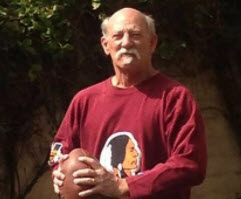
"Player evaluation is my strength," says TJ Troup, former coach and author of The Birth of Football's Modern 4-3 Defense and This Day in Football: A Day-By-Day Record of the Events That Shaped the Game, in a recent chat. "When you have a love of watching film and have an open mind film is the great teacher."

Troup had a tremendous friendship with Steve Sabol of NFL Films and with that came access to films few have ever had and he used that access to be educated. His skills as a college player and coach allowed him a perspective, Xs and Os-wise that most lack. And with that came his own perspective on NFL players of the distant past, recent past, and present. 
Troup

How it relates to recent posts on the Journal is that film evaluation or "scouting" or whatever the nomenclature that is to be used is part of the process, the resume of a Hall of Fame candidate, along with what we covered in those posts—Honors, statistics, testimonials, intangibles. We think it might be the major component of  "intangibles"  or even "testimonials" or it can be a category unto itself. It really, though, would depend on the voter.

In many ways HOF voters are jurors and we are reminded of these Colorado jury instructions for trials (which are similar in most states)

3:12 PREPONDERANCE NOT DETERMINED BY NUMBER OF WITNESSES

The weight of evidence is not necessarily determined by the number of witnesses

testifying to a particular fact.

3:14 SYMPATHY — PREJUDICE

You must not be influenced by sympathy, bias, or prejudice for or against any party

in this case.

3:15 EXPERT WITNESSES

A witness qualified as an expert by education, training, or experience may state

opinions. You should judge expert testimony just as you would judge any other testimony.

You may accept it or reject it, in whole or in part. You should give the testimony the

importance you think it deserves, considering the witness’s qualifications, the reasons for

the opinions, and all of the other evidence in the case.

3:16 DETERMINING CREDIBILITY OF WITNESSES

You are the sole judges of the credibility of the witnesses and the weight to be given

their testimony. You should take into consideration their means of knowledge, strength of

memory and opportunities for observation; the reasonableness or unreasonableness of

their testimony; the consistency or lack of consistency in their testimony; their motives;

whether their testimony has been contradicted or supported by other evidence; their bias,

prejudice or interest, if any; their manner or demeanor upon the witness stand; and all

other facts and circumstances shown by the evidence which affect the credibility of the

witnesses.

3:17 HIGHLIGHTED EXHIBITS

The lawyers have highlighted certain parts of some exhibits. However, it is for you

to determine the significance of the highlighted parts.

Sometimes, though the experts or what we've termed "testimonials" are not always vetted completely or come from a player's own coach or teammate, which had value but in our view not as much value as someone more independent. It's not that the player's teammate or coach is in error, he is likely right and has to be given plenty of credibility it's just that if you can find someone who was an opponent it takes the credibility even higher, that's all.

The main thing is that whoever is saying something, it needs to be reasonably accurate. We've seen claims of feats or achievements that were not true, most often the claim of  "he changed the game" but also "he was the first to do this". Those are often dubious. And that is where the film study comes it.

Here at the Journal, we've caught lots of claims of so-called innovation that were used in a case for a player that were just not accurate and we thought it was unfair to give Player B credit for something when Player A was really the first to do it and film study can show that pretty definitively. 

The same goes for non-film study items such as a quote from a coach or perhaps a statistical claim that is less than accurate. But today the issue is film.

Among the points Troup wants to get across is that through the film study he could see rewind a play and—

"(A)nd watch it over and over again. First for the true impressiveness of the play, the accuracy of the pass, the move of the runner, or the defender shedding the block, and pursuing properly to make the tackle.  There have been times in watching a film over for like the fourth time, only to realize a scheme or alignment changed, or even positions; i.e.; d-tackle now at end, and vice versa. Watching a game live that just does not happen. that is why the best coaches saw something on film others missed and were adept at teaching their players how to exploit or defend what they saw."

Film evaluation also can cause some problems, too. It can separate players who both have good numbers who both are Hall of Famers or worthy of such but one is really the far better player, at least in certain situations. 

To illustrate, we will use baseball rather than football. It is a little verbal game that Troup and his friend, author Allen Barra would play in conversations they called it "Who would you rather have?" They would do it as a way to pick one player over another, perhaps one was in the Hall of Fame and another was not.

So, it might go like this:

It's game seven of the World Series, who would you rather have as your starting pitcher, Don Sutton or Jack Morris? 

At the time Morris was not a Hall of Famer (he was inducted in 2018) but Sutton was and Sutton had a lower ERA (by more than half a run) had 70 more wins and over 1,000 more strikeouts.

Both would want Morris for that game seven, however.

That kind of game begs the question of what is a Hall of Famer? The better career? Or the better pitcher? And what IS the better pitcher?

Again, in baseball, we could do the same for recently inducted Harold Baines—who emerged from a panel that was composed of six players, one manager, six executives, and three journalists. 

Sidebar. 

When fans or football writers suggest more players should vote for the Hall of Fame I shake my head. Exhibit one should be Harold Baines as an example of what too many players can do when asked to judge the careers of their peers. We've talked to too many players who have perspectives way out of skew as to what a HOFer is. Theor perspective is too narrow and too full of bias. If they couldn't block a guy, he's a Hall of Famer. If he was a teammate, that boosts the case. If the guy was a "beast" whatever the hell that means, then he's a Hall of Famer.

Few NFL players take the time to take a step back and evaluate a player's entire career in terms of honors, stats, testimonials from opponents and then consider that there are only so many slots and that every player they couldn't block or who was a "beast" physically is a Hall of Famer. One would think that making it to the NFL means someone is, by definition, is a physical beast. The HOF is for the beasts among the beasts. 

Sidebar over. 

So, how many players would any of you readers take over Harold Baines as a right fielder or even designated hitter? Ten? Fifteen, headed by Dave Parker? A lot, anyway.

In our recent conversation with Troup, the conversation went that way for the NFL. Without using names to protect the lesser players, Troup was confident in his evaluations and understand that while two weakside linebackers might be worthy of the Hall of Fame—both with solid resumes in terms of honors, stats, testimonials, and even intangibles, if they were both on the same team and there was one roster spot left, one would be a "clear cut". 

The conversation went to a couple of safeties, both stunningly similar in credentials, but one was HOF-worthy and one was an All-Time great who is simply getting truly snubbed. 

Troup said, "I can make a case for a few inside or middle linebackers but when you put on the film and see what they all did and were asked to do, one stands out and it's not even close". 

It goes on. 

Paul Zimmerman of Sports Illustrated conversed with Troup often and they'd have debates, laughs, and even swearing contests. But the bottom line is Dr. Z relied on Troup's keen eye and evaluations. Once Troup said, "Why can't I put the film on and show some of these writers what the differences between these quarterbacks and the kind of throws they made and who could and could not make this throw?" or "Why is this cornerback is far, far superior to the one who maybe gets to more Pro Bowls?"

Troup recalls Zim telling him, "They will ask who is this guy who coached junior college ball in California? What Z was saying in his own loving way was 'Because they have their own agenda, TJ', they don't WANT to get the full story".

That was then, this is now. 

We think the current group of voters is different than the 1990s panel that is mostly long gone. And they do seek outside help. And Troup has, in his posts for the Journal. He's said several times to NFL writers, "If you don't believe me come on down to Kentucky and I will put on a pot of coffee and the film and I will show you what I mean."

Tim Layden of Sports Illustrated did just that and was planning a story for that publication but his employment ended before it got done (he's now at NBC).

So, the bottom line is film study is, as we mentioned earlier,  part of the "testimonial" HOF credential or perhaps the "intangible" credential or both but it is part of the whole, part of the "resume" and it matters.

Voters can give it the weight it deserves as part of the "evidence" as per the jury instructions but we feel that most certainly the best film will usually accompany the players with the most frequent honors and who have excellent testimonials because great film leads to the honors and the testimonials and often the statistics. As Proscout, Inc.'s Mike Giddings has said for over forty years "The Eye in the Sky Does Not Lie". Not only that, watching the film is the funniest thing to do aside from watching the games live.