Tuesday, September 6, 2022

TUESDAY TIDBITS: Right Around the Corner

By TJ Troup 
Thursday night in Los Angeles we will see two very strong teams begin what is hopefully another terrific year in the NFL. Steve Sabol shared with me more than once, "Coach, there are 32 puzzles to solve."

My days of making predictions are never going to return, yet there are folks that write online, and in print magazines that attempt to do so. There is accountability when you make a prediction, and as in years past—there will be some of those writers that will get taken to task for making flawed predictions. 

The meat and potatoes will begin next Tuesday since games will have been played. That said, the column today will be a short one. For those of you who watched "Hard Knocks"...found this year's edition compelling, and interesting. 
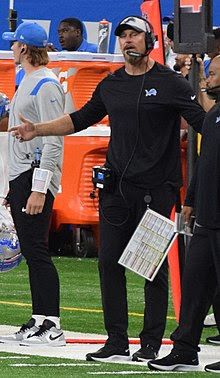
Can Coach Campbell change the culture? Does he have enough talent in Detroit to actually win close games this season? Will Aaron Glenn put a cohesive secondary on the field this year? Until the Lions actually play efficient team pass defense they will continue to lose. 

Hopefully, you folks that read this column will continue to put your thoughts, and opinions in writing. Really treasure hearing from any and all of you. The Dallas Cowboys forty-one years ago today took on rookie head coach Joe Gibbs and dismantled the Washington 26-10 in their quest to earn a seventh consecutive playoff berth. 
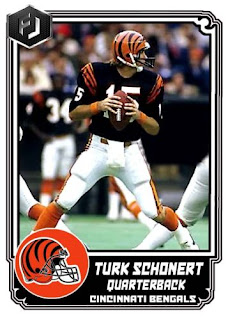
Forty-one years ago today former Servite High School quarterback Turk Schonert came off the bench to lead the Bengals to victory over Seattle. One of the receivers who helped Cincinnati win was rookie Chris Collinsworth (4 catches for 65 yards). The days of Mr. Collinsworth catching passes have long since ended, but we will hear from him often this year and his insights into the game. 

The 1981 Bengals earned a Super Bowl berth and will end with a question for all of you...will the 2022 Cincinnati Bengals return to the Super Bowl?

Monday, September 5, 2022

Reliance on Newcomers Could Sink Pack

 By Eric Goska

With Davante Adams gone, Aaron Rodgers (shown here in a game from 2012)
ma
y have to rely on newcomers in 2022 more so than at any other time in his career.

This season, Packers quarterback Aaron Rodgers may have to rely on newcomers more than ever. If that comes to pass, the team and its field general could find victories harder to come by in 2022.

Every year, quarterbacks around the NFL throw to at least a few players who have never caught a pass from them before. That’s not unusual in a league filled with change.

Last season, Rodgers completed passes to 16 different receivers. The bulk of those catches went to veterans such as Davante Adams (117), Aaron Jones (52) Allen Lazard (38) and AJ Dillon (30).

But as September turned to October and beyond, Rodgers made connections with four players for the first time: Juwann Winfree (4), Tyler Davis (4), Amari Rodgers (2) and Kylin Hill (1). Call those four newcomers, players who had not caught a pass from Rodgers before.

In 17 seasons, Rodgers has completed passes to 84 different players. Each year, he has added a minimum of three newcomers to that running total.

Typically, Rodgers engages with four or five newcomers each season. Only twice have more than six fresh faces (2008 and 2018) joined the party.

In 2008, the year Rodgers took over as starter, he found Jermichael Finley, Ryan Grant, Korey Hall, Tory Humphrey, Brandon Jackson, Kregg Lumpkin, Ruvell Martin, Jordy Nelson, and DeShawn Wynn for the first time. That was to be expected as Rodgers had been limited to just 35 completions in three seasons as a backup.

In 2018, Rodgers collaborated for the first time with Jimmy Graham, Jake Kumerow, Marcedes Lewis, J’Mon Moore, Equanimeous St. Brown, Robert Tonyan, Marquez Valdes-Scantling and Danny Vitale. Many hands contributed that season – 10 players caught at least 15 passes – and a good number were newcomers.

Nine newbies in 2008. Eight in 2018. Not only was the number of newcomers greater than usual during those two seasons, but so too was Rodger’s reliance on them.

Could something similar be in store for 2022?

In 2008, Rodgers completed 124 passes to newcomers. Nelson (32) and Jackson (29) caught nearly half of those as Green Bay (6-10) finished third in the NFC North.

In 2018, Rodgers tossed 123 passes to newcomers. Graham (53) and Valdes-Scantling (35) accounted for the majority of those as the Packers (6-9-1) again finished third.

Just how out of the norm were those two seasons? Based on his 12 other seasons as a starter, Rodgers averages just 31 completions to newcomers in a given year with the 11 last season being an all-time low.

That’s the way Rodgers likes it. He prefers the familiar, working with those he knows.

That said, this upcoming season has the making of another 2008 or 2018. With Davante Adams and Valdes-Scantling gone, it’s hard not to imagine Romeo Doubs, Samori Toure, Sammy Watkins, Christian Watson and others combining for well over 100 receptions.

Whether they reach that number or not, growing pains are to be expected. Minimizing mistakes and building trust will be key if Green Bay expects to contend for a fourth consecutive NFC North title.

Extra point: Should Rodgers complete passes to eight or more newcomers in 2022, he will break Brett Favre’s record (91) of having thrown to the most receivers in club history. Three other players in team annals – Bart Starr (44), Lynn Dickey (42) and Arnie Herber (40) – completed passes to at least 40 different players during the regular season in Green Bay.

Wet Behind the Ears
The eight regular seasons in which Aaron Rodgers completed more than 30 passes to newcomers.

  Comp        Year        Yards         TDs     GB’s record
     124            2008           1136              6              6-10
     123            2018           1708              6              6-9-1
      59             2014            666               6              12-4
      49             2016            618               4              10-6
      41             2019            500               2              13-3
      38             2015            446               3              10-6
      34             2011            437               2              15-1
      31             2017            323               1                7-9

Sunday, September 4, 2022

Don Hutson's Only Career Touchdown Pass (1943)

 LOOKING BACK
By Chris Willis, NFL Films
Don Hutson, Packers end 

Today PFJ looks back at one of the greatest plays in the career of Don Hutson. A play that didn’t involve him catching or intercepting a pass, or kicking a field goal or extra point. It doesn’t involve him making a tackle. Hard to imagine anything else.

On October 31, 1943, the 3-1-1 Green Bay Packers traveled east to play the 2-1 New York Giants, in a grudge match between two of the NFL’s best teams. When Don Hutson walked out onto the grass field at the Polo Grounds, he didn’t know what the day held in store for him. He would play one of his best overall games of his career and that’s saying a lot. A crowd of 46,208 spectators would witness one of the Alabama Antelope greatest achievements.

Green Bay Packers at New York Giants

Polo Grounds 

Packers- 35
Giants – 21

On the Packers second drive of the game, the great Don Hutson did something for the first and only time in his career – he threw a touchdown pass. He tossed it in his 92nd career game

After a few first downs the Packers faced a third and nine at the Giants 38-yard line. Time for a trick play. Don Hutson lined up tight at left end in a three-point stance. As soon as the ball was snapped Packers backs Tony Canadeo and Tony Falkenstein did a spinner play in the backfield, as Hutson did an end around, eventually taking the handoff from Falkenstein. Hutson sprinted wide around the Packers right end as if he was running the ball, but he stops quickly to launch a deep pass down the seam. Right as he throws the ball, he is clobbered from the blindside by Giants end Will Walls.

The hit didn’t faze Hutson as he threw a dart deep downfield to Packers end Harry Jacunski for a 38-yard touchdown. Jacunski had gotten by Giants defenders Emery Nix (NYG #44) and Bill Paschal (NYG # 8) down the seam to haul in the score. Hutson kicked the extra point to give the Packers a 7-0.

Don Hutson (#14), lines up tight at left end


Don Hutson about to throw with Giants end Will Walls (#24) bearing down


Harry Jacunski crosses goal for Packers touchdown

Polo Grounds scoreboard, Packers 7 Giants 0

This would be Hutson’s only TD pass of his 11-year NFL career. In 1937, Hutson threw four passes – three incompletions and one interception. He would go 0-for-3 in his other tosses in 1943. This would be his first and only completion. In the game recap the Green Bay Press-Gazette wrote: “It started like an end around, with Hutson taking the ball after Canadeo and Falkenstein had handled it first. It started out as a spinner, continued to look like the end around when Hutson took the ball and then ended up as a pass from Hutson to Harry Jacunski in the end zone. The play covered 37 yards all together! Hutson kicked the point and the Packers were out in front by 7 to 0.”

In the second quarter Hutson catches a 17-yard TD pass to help the Packers go up 21-7. It looks to be an easy Pack victory. But early in the fourth quarter the Giants storm back behind two touchdown runs by rookie back Bill Paschal to tie the game at 21-21.

Then the great Don Hutson went back to work. In the red zone Hutson ran a stutter and go route to catch his second TD pass of game, this one from 12 yards out from Tony Canadeo. Later in the fourth Canadeo runs 35-yards for the game-clinching score, 35-21. Hutson finishes the day with 7 receptions for 117 yards, 2 for touchdowns and goes 5 for 5 on extra points to score 17 points in the win. Oh, he also threw his only NFL touchdown pass.


Game recap, headlines and touchdown description
(Source: Green Bay Press-Gazette) 

In his 11-year career Hutson threw a total of 11 passes. Eight incompletions and two interceptions. His only completion was his TD pass to Harry Jacunski against the Giants at the Polo Grounds in 1943.

As for Jacunski he gets the distinction of being the only man in Packers’ history to catch a touchdown pass from Don Hutson. 

Harry Jacunski, Packers end

Jacunski was one of the Seven Blocks of Granite who played at Fordham, joining the likes of Vince Lombardi and Alex Wojciechowicz, on the Rams front line. He joined the Packers in 1939 playing the opposite end position from Don Hutson. Jacunski had his best individual season in 1943, finishing second to Hutson (47 catches, 776 yards, 11 TDs) with 24 receptions for 528 yards and three touchdowns. His impressive 22.0 average per catch led the team and was one of the best in the NFL. In 1944 he helped the Packers win the NFL Championship- his second title, also won in 1939. He would retire after that season. Jacunski was inducted into the Packers Hall of Fame in 1991. 

The Hutson-to-Jacunski connection only happened once, but it was a memorable one in 1943.

Saturday, September 3, 2022

Marvin Washington—Worth Remembering

 By John Turney

Marvin Washington out of the University of Idaho by way of UTEP (he played basketball for both schools) was the New York Jets sixth round (151st overall) in the 1989 NFL Draft. Washington set the Idaho record for sacks (14½) and was timed at 4.78 in the forty-yard dash. He had long arms, good athleticism but was raw. 

It was quite a draft for the Jets who, clearly, were trying to build a defensive line. Jeff Lageman was the Jets first-round pick, Dennis Byrd was their second-rounder, defensive end Ron Stallworth was taken in the fourth round and Washington rounded out the quarter of pass rushers taken that year.

The year before Paul Frase (scouted by Paul Zimmerman of Sports Illustrated who recommended him to the Jets) was taken in the sixth round. Nose tackle Scott Mersereau was a fifth-round pick by the Rams in 1987 but didn't make the club and was signed by the Jets as a free agent.

In 1988 Scott Mersereau started at nose between 1979 draft picks Mark Gastineau and Marty Lyons, so it was clear the 1989 draft needed to bring new blood to the Jets defensive front.

The next season Lageman was a rookie outside linebacker, Lyons was still a right defensive end in a base 3-4, Frase took over for Gastineau at left end and rookies Dennis Byrd (7 sacks) came in in the nickel defense and rookie Marvin Washington got snaps as a backup and on passing downs.

The 1990 season brought in new coach Bruce Coslet who took over for Joe Walton and Coslett brought in young defensive coordinator Pete Carroll as well as Monte Kiffen and they brought with them the Vikings scheme that had been so successful in Minnesota and vaulted Chris Doleman and Keith Millard into stars. 

It was a 4-3 defense that featured a nose tackle and a 3-technique (played by Millard) and was usually an undershift that put Millard on the weakside guard and allowed him to gut up the field when pass showed (a "high hat" read) and also to pursue run plays from the backside. In 1989 Millard was the AP NFL Defensive Player of the Year and right end Chris Doleman led the NFL in sacks with 21. 

This defense had been revived by Floyd Peters and Kiffen in 1986 with Minnesota. It has been used by the Giants in the early 1970s and a bit by the 1976 Buccaneers but it was more of a college scheme, in fact, many coaches called it the "college 4-3" and it also was known as the "Miami 4-3" since the Hurricanes used it throughout the 1980s and 90s with great success, featuring one great 3-tech after another.

Carroll thought he had the tools in New York to recreate a reasonable facsimile in the Meadowlands. His 3-tech or "Eagle" tackle was going to be Dennis Byrd. His blind-side end was going to be Lageman. His Henry Thomas was going to be Mersereau and his left end was going to be Marvin Washington, though Stallworth was the starter in the base, and 6-2 Darrell Davis was kind of the "Al Noga-type" a shorter left defensive end who came in on passing downs. Washington was the also rusher in nickel and became the starter at left defensive end a year later.

Dennis Byrd flourished at the Eagle tackle, totaling 13 sacks but Lageman had just four. Davis had five and Washington and Mersereau had 4.5 each and base end Stallworth had one. They weren't the 1989 Vikings just yet, but the 1986 Vikings were not the 1989 Vikings either. Back then teams had time to develop their players and implement and teach their schemes.

So, 1991 was full of promise, and the line gained experience and was pretty good, but still not great. Lageman led the team with ten sacks, and Byrd was second with seven. Washington had six and Scott Mersereau had a pair. 

The following season the wheels came off the "plan". Jeff Lageman got hurt in week two and missed the rest of the season. That caused a shuffling of the defensive line with Washington moving from left end to right end. Dennis Byrd, in the preseason, was moved to left end but of course, this was the season Byrd was tragically paralyzed after colliding with Mersereau. And with that, the promise ended.

Washington had a near-Pro Bowl season with 55 tackles, 17 combined sacks-stuffs, and deflected seven passes, making the most of his opportunity, but felt odd about it having been given the opportunity because of the injuries to his linemates, "I wanted to start this year but I didn't want anyone to get hurt." Speaking of the change defensive line coach Greg Robinson said, "Marvin does not have the same quickness as Jeff (Lageman) but he's a bigger, stronger player. He's more physical."

The next season he was back to left end and 13 combined sacks/stuffs.  An off-year followed but 1995 was a rebound with Washington totaling 14 sacks/stuffs combined.

Though Washington had played plenty of three-technique over the years, on some passing downs, sinking from his end position in the base defense, in 1996 he played it in the base defense a lot, splitting time there and at end.

He was cut by the Jets in August of 1997 with new head coach Bill Parcells telling the media, "I don't think he was in our plans."  he added that it was better and fairer to Washington to release him in early August rather than at the last cut down in early September. Many of the Jets players lamented the loss. Aaron Glenn said, "You cannot replace Marvin Washington. All you can do is get a guy in there who can play defensive end."

After the Jets cun him Washington was quickly picked up by the 49ers as a backup to starters Chis Doleman and Roy Barker though he was able to do so for ten games. An ankle injury ended his season early.

The following season he played the same role for the Broncos, getting himself a ring as a role player. For what turned out to be his final season Washington was back with the 49ers, this time as a starter, but was felled by a quadriceps injury after five games. Shortly after the season, the 49ers released Washington.

Washington had a fine eleven-year career and had six years as a full-time starter. He was a strong, powerful type of end who was very versatile playing both ends and even playing inside. It was a career worth remembering. 

Career stats


Thursday, September 1, 2022

Review—Bronko: The Legendary Story of the NFL's Greatest Two-Way Fullback

 By John Turney 
Chris Willis, the head of the Research Library at NFL Films, has a new book—his eighth—entitled Bronko: The Legendary Story of the NFL's Greatest Two-Way Fullback.

This book on Bronko Nagurski follows up his treatise on Red Grange and it is full of original and unique research and details we'd never heard before. It covers Nagurski's life—pre-football, his career, and his post-NFL playing days and does it well.

Willis is always so fluent in his writings of the Pre-World War II era and can make it relatable to younger readers who may not be enthralled with the NFL from that far back. 

As he had for his books on Red Grange and Joe Carr, Willis enjoyed the cooperation of the Nagurski family with access to loads of personal files and records and the inclusion of details from those documents makes the book more enriching and vivid.

Nagurski's early life is interesting as a Canadian by birth and as a Minnesotan, by residence, he worked on a farm and in local mills and built up tremendous strength. His collegiate career is covered very well with recounting of the numerous positions he played and the games he starred in for the University of Minnesota. 

The book recounts his tremendous Hall of Famer career for the Chicago Bears from 1930-37, then in 1943—and the gap between when he was a professional wrestler. 

Particularly interesting was the back-and-forth correspondence between Nagurski and Bears owner George Halas concerning contract negotiations since Halas was always trying to either cut or limit raises that the All-Pro was seeking and thought he'd earned.

Also covered well is the 1932 NFL Championship game that was played indoors that the Bears won with the help of a controversial jump pass by Nagurski to Red Grange. 

Also of note is that Willis had not planned to write the book on Nagurski but was convinced to do so after becoming acquainted with Nagurski's son. The younger Nagurski had read Willis' volume on Red Grange and wanted something similar for his father and eventually, Willis took on the project. 

This is a fine, fine book and highly recommended. 

Aaron Kampman—Worth Remembering

 By John Turney 
Aaron Kampman's career came in three parts. He began his career with the Packers and for his first four seasons he was what he termed "power end" and he was a solid strong-side end for the club. 

Then he has his peak seasons as a pass rusher, averaging 12½ sacks a season for three years from 2006 through 2008.

His last phase was as a player who ended his last three seasons on injured reserve with knee injuries.

Coming out of Iowa, when he was All-Big Ten as a senior and ended his career with 342 tackles, not a lot was expected from Kampman. He was a fifth-round pick by the Packers in 2002 and likely was expected to be a backup for a few years. However, an injury to Vonnie Holliday his rookie season gave Kampman a chance to start and he performed adequately. His coach, Mike Sherman said that his emergence helped mitigate the loss of some players that got hurt during the year, referring to Holliday and Joe Johnson. 

In 2003 Joe Johnson began the season as the power end with Kabeer Gbaja-Biamila as the "Elephant" or rush end but Johnson went down as he had the previous season when he began that season as the rush end. His injury left the power end spot to Kampman and once again he performed adequately. 

The following season the left end position was Kampman's and he again teamed with rush end Gbaja-Biamila with the latter getting the sacks and glory and the former with the dirty work. Kampman led the Packers defensive lineman in tackles and Gbaja-Biamila led in sacks. 

His tough gritty style drew compliments from his coaches, especially Sherman, who explained, "(Kampman) is a guy who day after day, game after game gets better. He'll continue to get better not just this season but in his career because his work ethic is phenomenal."

Sherman went on, "(He's) a blue-collar type of guy . . . a hard hat type of guy who comes to work every day and gives you his best."

Sometimes those kinds of comments are code for "not very athletic" and that may have been the case for the 6-4, 286-pounder. He certainly didn't have the power or explosiveness of Vonnie Holliday or even Joe Johnson, who in his prime was an excellent defensive end, but he was a player who was always learning, used his hands well, and used leverage to "play bigger than his size." He was noted for studying film to pick up clues on opponents. 

His defensive coordinator said, "He's a guy who uses tactical clues so when the ball's being snapped he can take all the scouting and game-plan information and use it in an instant."

His progress in 2004 had other teams were taking notice. After that season Kampman was a restricted free agent and the division rival Vikings offered him $1.2 on an offer sheet, which the Packers quickly matched.

The Packers made a wise decision. In 2005 Kampman again led Packers d-linemen in tackles and got to the quarterback 6.5 times for sacks just 1.5 behind the total of the rush end Kabeer Gbaja-Biamila who had 8.0.

With new defensive coordinator Bob Sanders being hired by the Packers in 2006 (Kampman's fourth defensive coordinator in five seasons) the responsibilities of the left end were different than in his previous seasons. No longer was there a power end and a rush end. Both defensive ends were allowed to get after the quarterback. To prepare for the new scheme Kampman dropped about 20 pounds and worked all off-season on improving his pass rush skills and it paid off. 

In 2006 he out-sacked Gbaja-Biamila 15.5 to 6.0 and was credited with 30 quarterback hits. His sack total was bested only by outside linebacker Shawne Merriman who led the NFL with 17.0 sacks and he was rewarded with his first Pro Bowl appearance and was Second-team All-Pro as well. That's pretty good for a guy who thought of himself as "someone who kind of flew under the radar."

The praise continued the following year. In 2007 Kampman was named All-Pro by Paul Zimmerman of Sports Illustrated. Dr. Z wrote, "Kampman played run and pass . . . Kampman, who seemed to get less relief than anyone else on that D-line, got the call on that basis."

Kampman finished with 12.5 sacks and was again Second-team All-Pro and a Pro Bowler. 

With the Sanders scheme, Kampman went from being a run-stuffer who began each as "like he was in mud," because of the technique he had to play as a power end, to one of the NFL's best pass rushers. 

In the three years in the Sanders defense Kampman totaled 37.0 sacks the second-most of any defensive lineman in the league just a half-sack behind pass rusher extraordinaire Jared Allen who had 37.5 sacks. What's more is that Kampman totaled 84 quarterback hits in that span while Allen, who played the right side and was not known as a great run defender, totaled 67. 

In addition, the analytic site Pro Football Focus had Kampman as having the most pressures (197) in the NFL in those three years, raking second in all three seasons. It was a successful run and very surprising given the way Kampman had to play earlier in his career. Who knew he could be an elite pass rusher?

The problem was this: In 2008 the Packers were 6-10 and ranked 22nd in points allowed and 20th in total yards allowed so the defense was not as successful as Kampman. Head coach Mike Sherman decided to make a change and brought in Dom Capers to be his new defensive guru.

Capers was a 3-4 defense guy and was going to install that scheme with the Packers. To accommodate the change Kampman was moved to left outside linebacker. 

Oh, it was all pre-planned. 

Packers brass explained that the switch was going to help Kampman, that it would not be much of a switch. He was to be the "Kevin Greene" of the defense, referring to Caper's All-Pro Sam 'backer when he coached the Steelers and Panthers. In fact, they hired Greene to tutor Kampman as the outside linebackers coach, to work with him, teach the techniques of the new position.

Little did they know the last part of Kampman's career was going to begin that season. The Packers improved to 11-5 and the defense ranked second in the NFL in total defense and seventh in scoring defense but Kampman was not a big part of that. Defensive Rookie of the Year Clay Matthews was the one who reaped the benefits of the 3-4. Kampman struggled with 3.5 sacks in the first nine games and then blew out his the ACL in his left knee being placed on injured reserve for the rest of the season.

So, in 2010, Kampman thought it was time for a change and to get back to defensive end. He signed a four-year $26 million contract ($11 million guaranteed) with the Jacksonville Jaguars in March. Said Kampman, "I'm excited to put my hand on the ground, very excited. I have a burning desire to do that."
It went according to plan, for a while that is. Kampman (now playing right defensive end) opened the season with a 1.5 sack, six quarterback-hit day against Denver. Through eight games he had four sacks but more importantly was getting consistent pressure with 16 hits on quarterbacks and 30 pressures until . . . the right knee went. In this case, it was during a non-contact drill at practice. 

The knees had now become a problem. It gave Jaguars head coach Jack Del Rio pause. He decided that Kampman's role in 2011, when he became healthy, was to be as a third-down rusher. Kampman had been an every-down player his entire career and tried to "get his head around" the role and ultimately accepted it. Del Rio thought that if he played 70,75 snaps a game all year, "I am not sure what he'd have left" so the plan was for the 32-year-old to play about 45 snaps a game.

It was a good thought but it never got implemented. Kampman's right knee never responded and he was inactive for ten of the first thirteen weeks, playing in just three games. After that, he was put on injured reserve for the third straight season.

He tried to give it a go in 2012 but in June the Jaguars made the decision to release Kampman ending his NFL career.

It was a good career. No, not a stellar career, a workman-like career that had some highs and lows but Kampman's legacy will be how a player thought to be just a run-stuffing power-type defensive end transformed into one of the NFL's best rushers for three years through an extraordinary work ethic and desire. 

Aaron Kampman—he was pretty good and worth remembering.

Career stats—

Tackles With The Most Seasons—Their Career Stats

By John Turney 
Jason Peters, the longtime Pro Bowl tackle, looks like he may be coming back for his eightieth NFL season. It has been reported that he's going to visit the Dallas Cowboys to possibly replace Tyron Smith, the Cowboys left tackle who is out for the season. It is not a sure thing and whatever discussions there have been are in the earliest stages.

If he does sign with the Cowboys (or anyone else) he will move up the list of years played among NFL tackles. Now, he's tied with Mike Kenn. Also, note that Peters missed a full season in 2012 when he ruptured his Achilles tendon in an off-season accident in his home).

Here is a list of tackles who played sixteen years or more and received significant post-season honors like All-Pro and Pro Bowls—
Source for All-Pros—AP, PFWA, SN
Jackie Slater leads with twenty and he's in the Hall of Fame but it is interesting that he's the only one. The other two who are eligible, Lomas Brown and Mike Kenn (both of whom started more games than Slater) have never gotten a look. 

In reading literature of the day longevity was something on HoF voters' minds, one of the "boxes" they liked to see checked. With recent players being voted in that had career-ending injuries like Tony Boselli, Terrell Davis, and Ken Easley that box is not seemingly as important as it had been.

But, when you look at the "honors" box, Brown is certainly on par with Slater, Kenn is very close. Maybe the "20" in the years played was a magic number for Slater even with several of those seasons being years he was not starting.