Monday, September 12, 2022

A Rookie Drops In

By Eric Goska
Bonus Coverage
Christian Watson dropped a bomb in Minnesota.
(screen capture from NFL Game Pass)

There he was, wide open more than 40 yards downfield. A rookie, Christian Watson, the Packers’ second-round draft choice, no less.

And then . . . and then . . . he dropped the pass!

So, what was more surprising? Watson failing to come away with the catch or Aaron Rodgers targeting a rookie on Green Bay’s first throw of the new season.

The Packers struck deep on their first offering of 2022. Rodgers dropped back from the 25 and rainbowed a strike that hit Watson in the hands near the Vikings’ 32-yard line.

Had he hung on, Green Bay likely would have tied the score at 7 and gained a much-needed measure of confidence and momentum.

Instead, Rodgers and the Packers floundered in a 23-7 loss in Minnesota. Rodgers didn’t target Watson again until just under four minutes remaining in the fourth quarter.

Whatever Watson’s career arc, that first drop is not the start he desired. But the fact that the team featured him early must mean they have high expectations for the receiver out of North Dakota State.

In more than a century of football, the Pack rarely entrusts a rookie with the first pass of a new season. Going back to 1922, only five prior to Watson could be found, and three of those were running backs, not ends.

As far as could be determined (the first target of 1969 and 1975 could not be determined, though it is almost certain veteran receivers were on the field at the time), Max McGee was the last rookie end to be targeted. He, too, did not fare well in his debut.

Quarterback Tobin Rote looked to McGee twice in the first quarter as Green Bay hosted the Steelers to start the 1954 campaign, but the pair could not connect. The duo clicked only once, that late in the second quarter of a 21-20 loss.

Keith Brehm of the Racine Journal Times was not impressed.

“The Packer air attack might have worked better, perhaps, had Bobby Mann been able to play. He was out with injuries and his replacement, rookie Max McGee, snared one pass for eight yards – but McGee is no Mann. He has no fake and his ‘stationary’ play made him easy to cover.”

McGee went on to catch 345 passes for the Packers and was inducted into the Packers Hall of Fame in 1975. There is no reason that Watson, too, might go on to have a stellar career with the Green and Gold.

Rookies Before Veterans
As near as can be determined (data is not available for nine seasons), these are the only six rookies to have been targeted on the Packers’ first pass of a season.

Year      Player, Position, Result
2022       Christian Watson, WR— incomplete
1986       Kenneth Davis, RB—complete, plus-5
1954       Max McGee, E— incomplete
1950       Al Cannava, B—complete, plus-28
1945       Clyde Goodnight, Eincomplete
1930       Weert Englemann, B—incomplete

Vikings Take To Ed Donatell's Defense Well

 By John Turney

Things could have been a disaster for new Vikings defensive coordinator Ed Donatell. Right out of the gate Aaron Rodgers challenged the scheme with a long pass, sure to be a touchdown, to rookie receiver Christian Watson that was dropped. 
Classic Fangio/ Donatell presnap look—Cover-2/4 shell with corners showing soft cushion
Credit: NFL Replay

Watson runs by Patrick Peterson but drops ball
Credit: NFL Replay
But after that heartstopping moment for the Vikings Donatell's calls worked very well limiting the Packers to seven points and 338 yards and holding four-time MVP Aaron Rodgers to no touchdowns and a 67.6 passer rating. 

The defense did give up 111 yards rushing but that is sometimes expected with this kind of defense because it features a six-man box a good deal of the time.

Background
Donatell is a disciple of Vic Fangio and ran Fangio's scheme with the 49ers (2011-14) the Bears (2015-18) and the Broncos (2019-21). Of course, like with any scheme, offensive or defensive, it changes and evolves over time—the 2014 49ers defense would not be exactly like the Broncos from last year—but the principles would still be similar. 

Fangio's defense, that shows a Cover-2/4 shell in the secondary and requires the players in coverage, both the secondary and linebackers that drop, to read and match the route concepts. The corners play from depth, eight yards, rather than pressing receivers at the line of scrimmage. Out of that shell look the defense can play Cover-2, rotate one of the safety into the middle and plays a Cover-3 look, play Quarters (Cover-4) or Cover-6—all out of the same presnap look.

Though it is technically a 3-4 base but that is only used against 21 or 12 personnel. Against three- or four-wides it involves a six-man in the box, rather than seven as traditional base defenses have for well over sixty-five years. It displays as a Penny/5-1, though usually, it's 33 nickel personnel, especially seen with the Chargers, Rams, and Packers but others as well. 

In the 5-1 the two outside linebackers are on the line of scrimmage as edge players and are de facto defensive ends. If a play is a run one of the safety crashes down and takes a gap to make the run fits work. Also in the 5-1, the interior defensive line plays a gap-and-a-half in their run responsibilities making it a hybrid between a one-gap and two-gap defenses.

Only likely passing downs usually what will be seen is a four-man line but with all the same coverages being used in those situations and in an ideal world not blitzing much. 

The philosophy is to not give up plays over the top, especially in the seams, and to make offenses be patient and slowly move down the field. It works because usually offensive play callers get impatient and want chunk plays—explosive plays that get the ball down the field quickly.

Fangio's scheme is all over the NFL these days. Brandon Staley took it to Los Angeles in 2020 and when he left to become the head coach of the Chargers Raheem Morris ran it while Staley took it to the Chargers. The Packers defensive coordinator, Joe Barry, runs it as well. It is propagating over the league with plenty of other teams employing at least some of the time as well. 

Ejiro Evero who is now the Broncos defensive coordinator came over from the Rams and a big-time Fangio/Staley/Morris influence will be displayed. 
Seahawks in preseason showing the Cover-2/4 shell
Credit: NFL Replay
New Seahawk defensive assistant Sean Desai (who ran the defense in 2021 with the Bears) likely will also have at least some influence on their defense that is now under first-year coordinator Clint Hurtt. We will know more tonight as Seattle takes on the Broncos. 
The Broncos with the shell behind a tilted front
Credit: NFL replay

In preseason, the Vikings show the 5-1 with the shell behind it
Credit: NFL Replay

Sunday
Donatell's defense frustrated Aaron Rodgers the rest of the day—the coverages were played well enough to give the Viking rush time to apply a lot of pressure on him. Rodgers seemingly grew frustrated.

The Vikings used a 3-4 base (the first time Vikings used since early in 1986) and a lot of 40 Nickel (4-2-5) and all the match zones that come with the scheme, only using man coverage a few times—one of those was on a goal-line stand and Fox announcer Greg Olsen pointed out that it was unusual and that it likely confused Rodgers. 
What was seen a lot yesterday versus the Packers—The shell behind a 3-4 base
Credit: NFL Replay

The 4-2-5 the shell or "umbrella"
Credit: NFL replay
Week One in the NFL is nowhere near enough to see what a team will do with a new scheme and a new coach. In a month much more will be known but at least in this test of the soft zones of the Fangio scheme, Donatell's defense got it done.

We will keep an eye out over the course of the season to see if they can keep it up but it was a good start.

Commitment to Run May Have Helped Pack in Opener

 By Eric Goska

AJ Dillon (28) carried 10 times at U.S. Bank Stadium Sunday.
(screen capture from NFL Game Pass)

The Packers will never be known as a mauling, run-first operation as long as Matt LaFleur and Aaron Rodgers remain with the team.

But one hopes the head coach and quarterback commit more to the ground attack than they did in losing 23-7 to the Vikings at U.S. Bank Stadium Sunday.

Green Bay averaged better than six yards a carry in rushing 18 times for 111 yards. The Green and Gold popped five runs of 10 or more yards and tallied eight rushing first downs to Minnesota’s seven.

Aaron Jones skittered 29 yards in the third quarter, the team’s longest gain from scrimmage. A.J. Dillon and rookie receiver Romeo Doubs each dashed for 11 more as the Packers scored their only touchdown, a push-the-pile, 2-yard drive by Dillon.

The majority of yards on that scoring drive (57 of 75) arrived on foot.

Green Bay entered the season with unknowns in the passing game. Newcomers such as Sammy Watkins, Christian Watson, and Doubs – players who had never caught a regular-season ball from Rodgers – were primed to get significant reps.

Factor in that veteran Allen Lazard (ankle) was sidelined against the Vikings, and running the ball made sense. And yet the Packers never ran more than two running plays in a row.

Historically, that spells trouble. Since 1954, Green Bay is 9-49 (.155) in regular-season games in which it does not run at least three times in succession. Eighteen of those losses were by 16 or more points.

In Minnesota, the Packers followed a run with a run just once in the opening two quarters. Dillon picked up four and two on the team’s second drive before Rodgers hit Randall Cobb for six and a first down.

Green Bay’s other eight first-half runs were all stand-alones. The earliest of those, Jones’ scamper on the team’s second play from scrimmage, gained 10 and suggested that pounding the ball might prove profitable.

Instead, Rodgers’ threw 15 times completing eight for 76 yards and a passer rating of 39.9 as his team fell behind 17-0 at the break.

The third quarter indicated what might have been had the Pack employed an earlier reliance on the run. Dillon, Jones and Doubs combined for 79 yards on eight trips. Green Bay held the ball for eight minutes, 37 seconds to 6:23 for the Vikings.

But, alas, Jones’ 5-yard carry for a first down on the final play of the third quarter served as the Packers’ last running play. The team finished with 21 straight passing plays in the final 15 minutes.

In essence, LaFleur had waved the white flag. Since 1953, Green Bay is 0-13 in the regular season when it fails to run at least once in the fourth quarter.

Extra points

  • Green Bay’s streak of having won nine straight in Minnesota when rushing for 100 or more yards came to an end.
  • Justin Jefferson’s 158 receiving yards in the opening two quarters is the second most recorded in a first half against Green Bay. New Orlean’s Eric Martin holds the record with 164 on three catches in the Saints’ 24-10 win over the Packers on Sept. 14, 1986.

Thursday, September 8, 2022

Remember the Time a Hall of Fame QB Threw a Pass to a Hall of Fame QB?

By Nick Webster

It’s a regular season game in Week Two in 1952 and something happened that hasn’t repeated itself to this day. It’s the first quarter of a home tilt in the Los Angeles Coliseum and the home-standing Rams are facing off against the future champion Detroit Lions. The Lions are an ascending power and will tally two of the three regular-season defeats against the Rams and knock them out of the playoffs, games between teams like these require a little something special. 

On 3rd and 12 to go in the first quarter the Rams line up with Norm Van Brocklin under center and with Bob Waterfield in the slot to the left. Van Brocklin rifles a short pass which is completed to Waterfield for a 5-yard gain, short of the first.  
Bob Waterfield was elected to the NFL Hall of Fame in 1965 and Norm Van Brocklin in 1971, making this the only time in history that two quarterbacks connected on a completed pass in a regular season game.

Later in his career, Van Brocklin would tutor a young future Hall of Famer in Sonny Jurgenson, but no passes were completed between the two. There was no combination of Sid Luckman, Bobby Layne or George Blanda connected for a completion with the Bears in the late 1940s. 

Blanda played long enough to team with Ken Stabler for the Raiders in the early 1970s but no passes were completed between the two. Never did aging, and unrecognizable, Charger Johnny Unitas complete a pass to Dan Fouts and the young Fouts never connected with aging Unitas. Steve Young was one of the more athletic quarterbacks around, yet the only two passes he caught in his career were thrown by his own left hand, no connections occurred between Young and Joe Montana.

As for future we already know that Hall of Famer Brett Favre and future Hall of Famer Aaron Rodgers never connected on a pass during their time with the Packers. In 2004 presumptive Hall of Famer Drew Brees caught a long pass from Hall of Fame running back LaDanian Tomlinson while potential Hall of Famer Phillip Rivers on the bench. Should Eli Manning squeeze into the Hall, neither he nor Kurt Warner were able to connect on a pass in 2004. 

It’s a fair bet to say that the pro game will go a long time before we again see what was seen on that day in 1952.

O.J. Simpson for Jack Youngblood?

 By John Turney 
In the Summer of 1976, there were fairly serious trade talks by the Los Angeles Rams and the Buffalo Bills about swapping O.J. Simpson for Jack Youngblood.

The Rams had failed to reach the Super Bowl in Chuck Knox's three years as the coach of the Rams, though they got close. The Rams defense was stellar and deep but the offense, while steady, was not very explosive and that caused owner Carroll Rosenbloom and general manager Don Klosterman concern, they wanted an offense that could get them over the hump—to the Big Game.

As far as the Bills situation Simpson was becoming disgruntled in Buffalo. He'd won all the personal awards and set records but he wanted a few things: To be in California for "marital issues" and to also be able to pursue acting, and he wanted to be with a contender.

It is hard to know how serious the Rams were but Bills owner Ralph Wilson was earnest in trying to grant Simpson's request. 

According to Dave Anderson's column in the New York Times, in the mid-summer of 1976 there were at least preliminary conversations, "(I)nformed sources say that Buffalo is seeking defensive end Jack Youngblood, considered by some experts as the best in the NFL at that position, linebacker Jim Youngblood and running back Lawrence McCutcheon."

Anderson also reported that the Rams made counter offers of draft picks (similar to what the 49ers paid the Patriots for Jim Plunkett that offseason) or a variable package of players that included McCutcheon, and a pick between Jack Reynolds or Jim Youngblood, a choice between Mike Fanning or Cody Jones, plus Jack Snow and Steve Preece. Note that there were initial offers and then Rams modified them, which essentially gave Bills choicr.

Nevertheless, Wilson scoffed and those proposals saying he wasn't interested in draft picks and wanted better players, especially Jack Youngblood. Of the others Wilson said it was like trading a Rolls Royce (O.J. Simpson) for a Cadillac, a Toyota and a Datson."

Youngblood also and a sense of humor about it. When he ran into Wilson when the player's committee (which he was part of) met with the owners he said to Wilson, "How's it going, boss?"

Meanwhile, Simpson threatened to retire, asking, "Am I not going to play football because the deal didn't get done?"

Ultimately, the Rams made it known to the Bills that Jack Youngblood was "untouchable." Youngblood noted that "(A)round camp, I was suddenly Carroll Rosenbloom's son."
Newsday (Nassau Edition) (Hempstead, New York) Sep 29, 1976
Youngblood's reaction to the ordeal was one of being flattered (for being highly prized) and also one of cold reality about life in the NFL, "You play bad and you hear you might get traded, you play good and you hear you might get traded." 

Simpson didn't report to the Bills until September and was not in game shape. He played but didn't start in the opener and through the first three weeks of the season he averaged 2.6 yards on 41 carries.

By October, he was back to being O.J. and he closed with 1398 yards in the final 11 games. The next year he got hurt midseason and early in 1978, he finally got his trade to a West Coast team—the San Francisco 49ers. 

2022 Awards Predictions

OPINION
By John Turney 
MVP—Patrick Mahomes
Offensive Player of the Year— Justin Jefferson
Defensive Player of the Year—Nick Bosa
Offensive Rookie of the Year—George Pickens
Defensive Rookie of the Year—Aidan Hutchinson 
Comeback Player of the Year—Christian McCaffrey 
Coach of the Year—Dan Campbell
Most Improved Player of the Year (PFWA)—Baker Mayfield

Wednesday, September 7, 2022

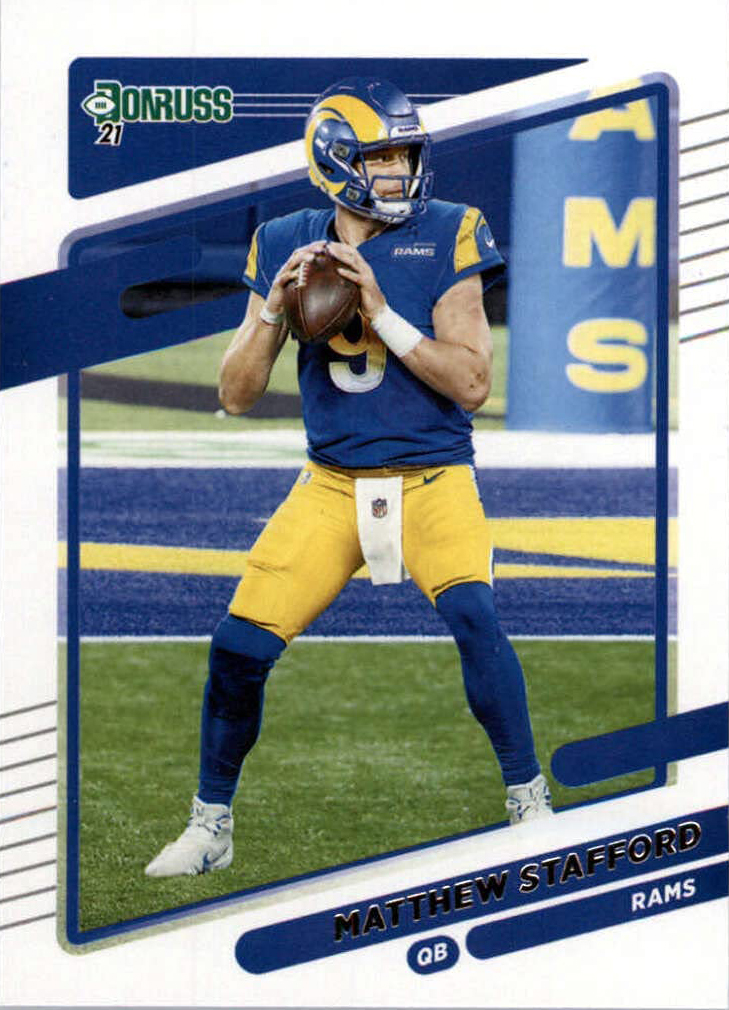
Matthew Stafford—Poised for MVP?

OPINION
By John Turney 
Elite arm? Check.

Elite toughness? Check.

Elite no-look passed? Check

Matthew Safford has always had the goods—he has MVP talent. As everyone knows he was in a poor situation in Detroit and was not always able to get the results you may expect from his skill set.

Then came the monster trade to the Rams, a perennial playoff team since head coach Sean McVay arrived in 2017. They had talent on both sides of the ball and in McVay one of the best and most innovative coaches in the NFL. The trade worked out big-time with the Rams winning the Super Bowl and Stafford getting his ring.

The Rams are most certainly able to repeat as Super Bowl champions but in a competitive league, odds are against it as they are for all the teams, even the very good ones. On the flip side, they have as good a chance to win the big game in Glendale, Arizona, next February as anyone—The Bills, Chiefs, Packers, et al.

With all that it would seem Stafford is poised to take the next step—contending for the Most Valuable Player award. He was in the conversation during the first half of last year

Last year for the first eight weeks Stafford was putting up MVP numbers—The Rams were 7-1 and he'd completed  68.9 percent of his passes for an average of 309.6 yards a game and tossed 22 touchdowns to just four picks. He's only been sacked seven times and had a passer rating of 108.0.

Then things changed. 

Perhaps nagging injuries, perhaps playing the tougher half of their schedule but it was clear that Stafford's personal performance nosedived, even though he was able to keep the Rams winning.

The final half (nine games) of the season had a stat line of 267.7 yards passing a game, 19 touchdowns and 13 interceptions (which vaulted him to the top of the NFL in that category), a 90.4 passer rating (right at the league average) and he was taken down by pass rushers 23 times. 

And little of the mediocre quarterbacking was attributable to the offensive line or poor receivers. The line was good and the receivers were more than good, in fact, as good a set as any quarterback could want. 

Stafford just didn't play well and at times tried to try to do too much and would make some pretty big negative plays like pick sixes, a category that he led the NFL. (He also led or tied for the lead in 2020 and before that 2009 and 2012). 

Whatever the reason and no matter who was to blame for them but they are simply something that has been part of Stafford's resume for a long time. He's now the NFL's active leader in interceptions returned for touchdowns, and no one is with eight of his career total of 27.

Of course, not all those interceptions returned for scores were Stafford's fault, maybe a bad route or some other miscommunication contributed mightily. But, some were on him when he played "hero ball"—rather than taking a sack he'd attempt passes when a play was for all intents and purposes over. He'd be close to in the grasp of a defender and he'd attempt a pass and that led to at least some of those poor throws that were taken to the house or put the opponent deep inside the Rams territory. 

During his late-season slump, he appeared at times to be trying to make a stunning play like Patrick Mahomes or like Brett Favre used to do, but without the knack for making something out of nothing like Mahomes, Favre, and the others that seemingly did that routinely. Like anything it's a skill, a talent and some have it, some don't. Stafford is about in the middle, plant of times it has worked in his career and may times it failed. 

Regardless, by Week 10 he was out of the MVP mix and then went down from there.

Then came the playoffs and a reprieve. Not for MVP but to prove his mettle as a championship quarterback. 

And he did it. Stafford is the owner of a Super Bowl ring.

In the 2021 playoffs, the Rams defense was excellent and their pass-happy coach (run percentage 39.7 in the regular season) changed things up and stuck to the run game more than he had all season. Rams fans will tell you that too often when a running back got stuffed a few times in a row McVay would abandon the running game altogether. 

In the playoffs that didn't happen. 

Against the Cardinals, McVay called 38 run plays to 19 pass plays—66.7 percent. It was like he'd been channeling Chuck Noll or "Ground" Chuck Knox. The following week versus the Bucs the Rans ran the ball 30 times even though it netted just 73 yards—but McVay stuck with it. 

True, it's just a correlation, not causation but whatever the reason the Rams ran the ball more consistently and they won doing it. Using the eye test it very much seemed that the offense worked better when it was more balanced vis-à-vis the run versus pass ratio. While analytics people will scream but sometimes a running game can contribute to a win, even in this era. And it was clear McVay was committed to his game plan.

The run-pass ratio tailed off after that somewhat but the NFC Championship Championship game was a fight for their lives as was the Super Bowl. So when it was needed the passing game took it home. 

Still, for the playoffs, McVay called 44.6 percent running plays. Clearly, McVay throttled down the pass-crazy tendencies and it likely took the pressure off Stafford and likely snapped him out of the tendencies he showed during the second half of the season.

How did this affect Stafford? Positively when watching him and that was reflected in his numbers. No more "hero ball". He simply played better.

With a solid running game, Stafford still made great passes, no-look, deep strikes than won games, and in that structure, his numbers were again MVP-esque. He had a passer rating of 108.3, completed 70 percent of his passes and threw nine touchdowns to three picks.

How does this relate to 2022?

Simple. Stafford does not need, necessarily, to duplicate 17 games of the kind of production he had in the first half of 2021. If the Rams can stick to something more akin to the playoff formula he might not feel the need to play make extremely off-schedule throws and therefore avoid the kind of slump he had in the second half of the season. 

The talent has always been there. Now the template is there and if followed Stafford could very well put up a full season of MVP-type numbers. 

Sure, not unlike the Rams repeating there will be great competition for the MVP—Mahomes, Aaron Rogers (going for his third straight), maybe a Justin Herbert or a Lamar Jackson (who has one under his belt) but given the Super Bowl win and the style in which it was won Stafford could keep himself in the conversation for the NFL's ultimate personal award.